Wednesday, December 31, 2008

December 31:


1999 : Panama Canal turned over to Panama


On this day in 1999, the United States, in accordance with the
Torrijos-Carter Treaties, officially hands over control of the
Panama Canal, putting the strategic waterway into Panamanian
hands for the first time. Crowds of Panamanians celebrated the
transfer of the 50-mile canal, which links the Atlantic and Pacific
oceans and officially opened when the SS Arcon sailed through
on August 15, 1914. Since then, over 922,000 ships have used
the canal.

Interest in finding a shortcut from the Atlantic to the Pacific
originated with explorers in Central America in the early 1500s.
In 1523, Holy Roman Emperor Charles V commissioned a survey
of the Isthmus of Panama and several plans for a canal were
produced, but none ever implemented. U.S. interest in building a
canal was sparked with the expansion of the American West and
the California gold rush in 1848. (Today, a ship heading from
New York to San Francisco can save about 7,800 miles by taking
the Panama Canal rather than sailing around South America.)

In 1880 a French company run by the builder of the Suez Canal
started digging a canal across the Isthmus of Panama
(then a part of Colombia). More than 22,000 workers died from
tropical diseases such as yellow fever during this early phase of
construction and the company eventually went bankrupt, selling
its project rights to the United States in 1902 for $40 million.
President Theodore Roosevelt championed the canal, viewing
it as important to America's economic and military interests.
In 1903, Panama declared its independence from Colombia in
a U.S.-backed revolution and the U.S. and Panama signed the
Hay-Bunau-Varilla Treaty, in which the U.S. agreed to pay
Panama $10 million for a perpetual lease on land for the canal,
plus $250,000 annually in rent.

Over 56,000 people worked on the canal between 1904 and
1913 and over 5,600 lost their lives. When finished, the canal,
which cost the U.S. $375 million to build, was considered a
great engineering marvel and represented America's
emergence as a world power.

In 1977, responding to nearly 20 years of Panamanian protest,
U.S. President Jimmy Carter and Panama's General Omar Torrijos
signed two new treaties that replaced the original 1903 agreement
and called for a transfer of canal control in 1999. The treaty,
narrowly ratified by the U.S. Senate, gave America the ongoing
right to defend the canal against any threats to its neutrality.
In October 2006, Panamanian voters approved a $5.25 billion plan
to double the canal's size by 2015 to better accommodate modern
ships.

Ships pay tolls to use the canal, based on each vessel's size and
cargo volume. In May 2006, the Maersk Dellys paid a record toll of
$249,165. The smallest-ever toll--36 cents--was paid by Richard
Halliburton, who swam the canal in 1928.

~~~~~~~~~~~~~~~~~~~~~~~~~~~~~~~~~~~~~~~~~~~~~~~~~~~~~~~~~~

General Interest
1999 : Panama Canal turned over to Panama
http://www.history.com/tdih.do?action=tdihVideoCategory&id=52296
1600 : Charter granted to the East India Company
http://www.history.com/tdih.do?action=tdihArticleCategory&id=5645
1775 : Patriots defeated at Quebec
http://www.history.com/tdih.do?action=tdihArticleCategory&id=5646
1879 : Edison demonstrates incandescent light
http://www.history.com/tdih.do?action=tdihArticleCategory&id=7128
1968 : Soviets test supersonic airliner
http://www.history.com/tdih.do?action=tdihArticleCategory&id=5647

Financial Crisis Sends Tuition Costs Sky-High as Colleges Face Crunch


By Pedro de la Torre III, Campus Progress. Posted December 31, 2008.


Not everyone is suffering equally: low and middle income students are particularly vulnerable in the current economic environment.

Students are often the last ones given a seat at the budget table when times are good, and the first to be put on the table when bearish economies (or the desire to give tax breaks to millionaires) necessitate painful budget cuts. Certainly, this was the case in the so-called "raid on student aid" in 2006, and is part of the reason that a recent report awarded every state in the country, except for California, an "F" when it comes to college affordability.

Economic turmoil is taking a serious toll on college and state government budgets, and most students are already feeling the pinch of austerity. Not everyone is suffering equally, however: low and middle income students are particularly vulnerable in the current economic environment.

States across the country are getting hit hard by shrinking tax revenue, and are finding themselves in the red for the upcoming year. That means that they will, or already are, under pressure to slash college budgets, and possibly even trim state student aid programs. The cuts to higher education will, in turn harm public colleges which will need to turn to other sources of revenue.

These alternate sources of revenue will be much more limited than in the past, however, and this spells trouble for students at both public and private colleges. Endowments are taking at beating as the stock market, real estate market, and other markets plummet. The near-frozen credit markets are causing cash-flow problems at some schools.

That leaves one major source of funding for colleges and universities: get students to make up the difference. While a few colleges have temporarily frozen tuition, most colleges will be looking for ways to pass the buck onto students or their families. Colleges are trying a combination of tuition hikes, enrollment cuts, and diminished student aid and services.

There are always a large number of students that find a gap between the amount of federal aid they are awarded and the full cost of attendance. If a school does not step in and fill the gap with its own funds, that student may just have to find a different, cheaper school, or forgo higher education altogether.

This gap can be the intended consequence of a calculated strategy. Many schools use student aid and tuition discounts to maximize the number of (wealthy or dangerously indebted) students paying higher portions of the tuition bill. It is called "financial aid leveraging." The Atlantic once explained how it works very well:

Take a $20,000 scholarship -- the full tuition for a needy student at some schools. Break it into four scholarships of $5,000 each for wealthier students who would probably go elsewhere without the discounts but will pay the outstanding tuition if they can be lured to your school. Over four years the school will reap an extra $240,000, which can be used to buy more rich students -- or gifted students who will improve the school’s profile and thus its desirability and revenue.

In other words, wealthy students tend to receive larger student aid packages on average from their schools than low income students do. Additionally, many colleges will be under more pressure to drop "need-blind" policies, where schools do not consider financial need as part of the admission process,, and "full-need" policies, where schools guarantee that all students will have their financial needs met. Both tend to benefit low-income students. Tufts University, for example, told the New York Times that they may no longer be able to afford to be need-blind policies.


Digg!

See more stories tagged with: college, financial crisis, tuition, affordability, low income students

Pedro de la Torre III is an Advocacy Senior Associate at Campus Progress. He graduated from University of Texas–Austin.

My Dangerous Encounter With a Supermarket Security Guard & His Gun


By Linda Milazzo, AlterNet. Posted December 31, 2008.


'For the first time in my life, I experienced overwhelming, palpable fear.' Was it a Brink's guard or a Blackwater mercenary pointing his gun at her?

For years, since the United States invaded Iraq, I've witnessed countless photo and video images of innocent civilians -- men, women, teens and children -- being rudely and aggressively threatened by hired uniformed militants (mostly men), wielding guns. I've seen these images from Iraq, Afghanistan, Somalia, Haiti, Palestine and more. Whether they be armed American military threatening Iraqis, armed Israeli soldiers threatening Palestinians, or armed Ethiopian troops threatening Somalis, the images have always disturbed me. There's an inherent injustice to such blatant imbalance of power. An injustice I suffered recently myself.

The oddity here is that unlike those less-fortunate innocents in war zones who faced the guns of hired aggressors, I was not in a war zone when I faced mine. I wasn't even in a high-crime zone. I was in a gentle middle-class suburb, where my aggressor, an armed Brink's, Inc. security guard, was in full combat mode performing his non-war-zone duty. My aggressor more typified the machismo of a Blackwater guard than the demeanor of community-minded Brink's, when he flailed his loaded gun at me, as though he'd done it often before. My armed Brink's aggressor was not merely disrespectful. He was downright hostile and dangerous. He treated me as his enemy and freely showed me his force.

Here's how it happened:

On Nov. 6, at approximately 12:45 p.m. on a sunny afternoon in Los Angeles, I walked through a parking lot en route to my neighborhood Albertsons market to pick up a prescription. I paid no mind to the Brink's armored truck to my right, as it waited alongside the store. The second I reached the store entrance, the uniformed Brink's guard emerged from the market with his gun outstretched, pointing in my direction. His face was turned away from his gun, leaving him unaware of my presence. Before I knew it, I'd walked right up to his gun, stopping inches before colliding. The suddenness of my stop thrust me slightly forward. I was so close to his gun that I saw its every groove -- from its "sexy" color and shape -- to its perfect fit in his hand. Its glimmer still glares in my mind.

Just then the guard turned and saw me and completely lost his cool. He flinched at my proximity just as I flinched at his. He became more aggressive despite my obvious fear. Instead of assessing that I was no threat and pulling back to allay my fear, he took the opposite tact. He became more aggressive and waved me off with his loaded gun, shaking it threateningly to move me away. I responded without hesitation, believing that if I hadn't, I might end up dead. In that one brief encounter, my entire 59 years of believing I was fearless evaporated in air. For the first time in my life, I experienced overwhelming, palpable fear and a vulnerability I'd never known.

I entered the market and went immediately to customer service to tell the store director what happened. I was clearly upset as I entered, as the store video would later show. Without going into further detail on what transpired in the store, let me just say that the store director at Albertsons couldn't care less. That part of my investigation is continuing, and has direct impact on why this article is being published today rather than closer to the date of the incident. Suffice it to say, Albertsons-Supervalu has steadily dropped the ball and is only fully coming on board now. Brink's, after all, is contracted by Albertsons. I'm Albertsons' customer -- not Brink's.

To be fair to this Brink's guard, and to those who work in armed-security services, I've learned quite a bit about the mind-set and dangers of being an armed guard. In fact, it's a highly dangerous profession, and in many ways, as underscored by a veteran LAPD officer with whom I spoke, more perilous than traditional law enforcement. In the realm of private security, where guards are transporting items of value, attackers hit directly at them. This differs from traditional law enforcers, who are commonly the pursuers and rarely the pursued. Thus Brink's guards and all private security who protect high-value targets must be hypervigilant and aware of their surroundings at all times. In fact, numerous Brink's and other security guards have been killed and wounded on the job.

Nonetheless, as I've also learned, Brink's guards have the option to unholster their weapons or to keep them in place as each situation demands. The guard who flailed his loaded firearm at me, unholstered it (as shown in the store video) and brandished it threateningly even though there was no imminent threat to his safety. His combat-style overzealous use of his weapon, his extreme edginess and his failure to accurately gauge his surroundings, resulted in a near collision between me and his gun that could have easily ended my life.

It's legal in California for a licensed private security guard to unholster his or her firearm if he or she perceives danger. Should the gun be unholstered, it must be pointed down. In my case, this gun was pointed toward me. At the time and date of my incident, no report of anything unusual in or around Albertsons was called by this guard, or by his team, in to the San Fernando headquarters where they're housed. Nor was anything out of the ordinary reported to the staff at the Albertsons before the guard left. The guard's clear view of the parking lot through the exit-way window, which would have shown me approaching, along with the full view of the parking lot for the driver of the armored vehicle, indicated no impending danger. Yet this guard unnecessarily and dangerously withdrew his weapon and launched into full combat-mode. He entered the parking lot with a brandished loaded firearm, and thus he endangered innocent civilians.


Digg!

See more stories tagged with: security guards, armed guards, brinks, linda milazzo

Linda Milazzo is a Los Angeles writer, educator and activist. Since 1974, she has divided her time between the entertainment industry, government organizations & community development projects and educational programs.

Sleeping Around Craigslist


By Anna Reed and Lily Penza, East Bay Express. Posted July 9, 2008.


Two middle-aged women discover that casual sex can be anything but casual.

AlterNet is resurfacing some of the best and most popular articles published in 2008. In this piece, published this July, Anna Reed and Lily Penza go undercover to explore what sex life is like on Craigslist.

It takes a woman about a thousand words and a condom to get laid on Craigslist. But for a woman to be laid properly -- by a passionate lover who knows what he's doing -- well, that's a whole different ball game.

We are both middle-aged women who have spent the past 11 months sleeping around Craigslist. At an age when most women were sending their firstborns off to college, we found ourselves -- through chance and circumstance -- single, tumescent and ripe for adventures. Those adventures have spanned 10 counties and four states and involved roughly 45,000 e-mailed words, 27 phone calls, 36 face-to-face initial dates and 13 actual lovers -- and re-aggravated our carpal tunnel syndrome from all the typing.

Years before embarking on Craigslist, both of us had experienced sexual abandonment. We were both hungry for intimacy and physical touch after years of wandering in the desert. Our lives were on similar trajectories.

Lily Penza, 46, had been overweight since her teens and suffered from dangerously low self-esteem. At age 28, she moved in with the first man who looked her way. It was a virtually sexless union for 10 years before a therapist helped her come to her senses and move on. Lily never married and spent most of her life caring for an ill parent who died recently. So she lost 40 pounds and decided she would make up for lost time.

Anna Reed is a 50-year-old who, as a young woman, had been raped and pressured into sex during the so-called sexual revolution. She had read books on women's sexuality -- Barbach, Tisdale, Jong, Hite and Nin -- but each held only a small piece of the puzzle. Not one of these authors could tell her as much about sexuality as her own inner life did. Emerging from a stale and sexless marriage, she would do things her way this time around.

Lily turned to the free Craigslist personals because didn't want to spend any money getting laid. She started answering ads last July. She was open to every person and every experience -- even Republicans, as long as they could kiss. Lily told her close friends about how thoroughly she would be sleeping around, joking, "I want my vagina to have call-waiting." Now she is enjoying the adolescence she never had, dating like an oversexed high school student but armed with the wisdom and savvy of a woman in her 40s.

Anna decided to try Craigslist because she found other online dating sites too silly. Now, despite her wrinkles and middle-age spread, she "dates" a multitude of guys. But they aren't really dates. "We don't go places together; they sometimes buy lunch but just as often they don't. I'm sleeping with them. Actually, that's a euphemism; we have sex." With a lover whose bad back has him on the injured reserve list, Anna knows what to do: click on "Casual Encounters" and start the e-mail banter that almost always leads to a meeting. "I don't have a boyfriend," she says, "I have a team roster."

Lily and Anna are not our real names, but then you probably knew that was coming. Virtually everyone on Craigslist lies about something: their name, their age, their weight, their marital status, maybe even their penis or bra size. For the purposes of this story, we have changed everyone's names to protect their privacy.

The two of us met when Anna answered an ad that Lily's then-boyfriend, Scott, posted on Craigslist. Lily and Scott were seeking a third partner to join a menage a trois. Before anybody actually met face to face, Lily dumped Scott and canceled the threesome, but she became e-mail pals with her would-have-been sex partner, Anna.

Once we met, we realized we had a lot in common, and began sharing our respective experiences. Our adventures have included the hot, the not-so-hot, and some potential hook-ups that never even got off the ground. There were memorable ones, like Lily's first date, which ended at 3:30 a.m. at the Power Exchange sex club. Or the ex-con who went down on Anna for an hour straight.

There were forgettable ones too, like the alcoholic art dealer, or the guy who excused himself in the middle of sex to smoke a cigarette. And there have been multiple-partner dates, which involved average-looking East Bay residents who swing, tie up, dominate, submit, and spank.

What kind of sex did we find? Some of the lovemaking was wonderful, a lot of it was initially awkward but got better as time went on, and some of it was downright disastrous. Upending the notion of "Casual Encounters" -- as Craigslist dubs its "Just Looking to Get Laid Tonight" category -- we both discovered that casual sex is anything but.

Perhaps because we are highly verbal, our initial Craigslist encounters involved a ream of e-mail. Sometimes we just coordinated the logistics of the hookup, but equally often, we wrote and received profoundly intimate and revealing letters -- an epistolary of erotic stories.

Then there is the issue of sexual chemistry, which is arbitrary, inexplicable and largely unpredictable. Terrific e-mail connections don't guarantee a sizzling face-to-face meeting. And not everyone keeps their word. More than once, last-minute cancellations left us calling one another for support, or just drunk, horny and alone with a DSL connection.


Digg!

See more stories tagged with: women, dating, craigslist, middle age

The Bizarre Life and Angry Times of Bill O'Reilly

The Bizarre Life and Angry Times of Bill O'Reilly

The Bizarre Life and Angry Times of Bill O'Reilly
By John Dolan, AlterNet


O'Reilly's book tells the tale of how he blustered

and threatened his way through life to reach

TV stardom. Read more »

Lorelei Kelly: Israel, Stop! Just. Stop.

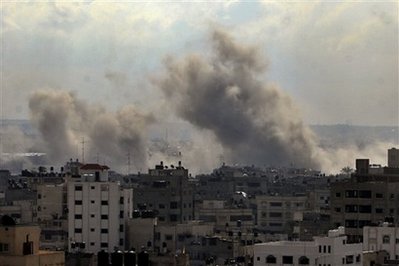
2008-12-30-capt.64538bcebe6f49e99512f660133a4254.mideast_israel_palestinians_jrl132.jpg

AP

Lorelei Kelly: Israel, Stop! Just. Stop.

Lorelei Kelly: Killing lots of people on the other side is not only ineffective, it is counterproductive. It hurts your cause. It gets more of your own people killed in the long run. Like Israel -- whose overwhelmingly violent response to Hamas rocket attacks seems to lack the most basic strategic or political meaning -- and where language such as "self-defense" -- words from the disconnected and bygone era of nation states -- seems quaint and almost entirely inaccurate. "Defense" doesn't mean the same thing when one antagonist is a state and the other a networked organization. It's like the US Army fighting the Salvation Army. It's like Bin Laden versus the USA. The same sets of policies and tools don't work anymore. They make things worse. So political leaders (including our own) need to stop framing this deadly mayhem as some sort of justified or normal behavior. If we don't start with our best friend, when will we ever understand how the nature of danger has changed for good? Click here to read more.

A Change We Can Believe In - Dumping Industrial Agriculture

A Change We Can Believe In - Dumping Industrial Agriculture

by Jim Goodman

As 2009 approaches, the United Nations Food and Agriculture Organization (FAO) notes nearly a billion people a day go hungry worldwide. While India supplies Switzerland with 80% of its wheat, 350 million Indians are food-insecure. Rice prices have nearly tripled since early 2007 because, according to The International Rice Research Institute, rice-growing land is being lost to industrialization, urbanization and shifts to grain crops for animal feed.

Yet, according to FAO statistics, world food supplies have kept pace with population growth. There is enough food to adequately feed everyone. Clearly, root causes of the food crisis lie in politics, problems with food distribution, poverty and a failure of the industrial food system to deliver its promises.

Dr. Bob Watson, chief scientist for the Department of Environment, Food and Rural Affairs in the UK, places the blame for the food price spikes on several factors; grain being shifted to animal feed, drought, increased use of grains for biofuels and speculation in food crops. While proponents assert that industrial agriculture is the only hope to end the food crisis, it appears that industrial agriculture is *causing* the food crisis.

A study by the International Assessment of Agricultural Science and Technology for Development (IAASTD) found, that as industrial farming practices are adopted in countries like India, small farmers and landless peasants are forced off the land. Hundreds of vegetables and weeds that were part of the traditional diet are wiped out by mono-cultures and herbicides used on the Genetically Modified (GM) crops. Thus, as Margaret Visser tells us, more rice and wheat produced in India really meant less food and less nutrition.

In 1995 Monsanto CEO Robert Shapiro addressed the Society of Environmental Journalists stating "The commercial industrial technologies (the Green Revolution) that are used in agriculture today to feed the world... are not inherently sustainable." Even Shapiro, was admitting the Green Revolution would fail. As George Kent notes in /The Political Economy of Hunger/, "the benefits of Green Revolution yields went into the mouths of rich world denizens, in the form of meat and processed foods"

IAASTD concluded that small-scale farmers in diverse ecosystems should be the focus of efforts to get better quality food in the right places. Farmers need better access to knowledge, technology and credit, but was biotechnology *the *technology ? Watson told the UK Daily Mail "Are transgenics the simple answer to hunger and poverty? I would argue, no."

Study after study indicates small scale, integrated organic/low input sustainable production can produce more food, of higher nutritional value locally, where it is needed.

A 15 year study at the Rodale Institute showed similar yields for conventionally raised vs. organic corn and soy, with soil fertility being consistently higher in the organic systems.

The Broadbalk study in the UK, ongoing for over 150 years, shows higher yields in integrated organic systems over conventional systems with soil fertility remarkably in the organic system.

In /This Organic Life/, Joan Dye Gussow notes that prior to World War II, even with its harsh climate, Montana produced 70% of its own food, including fruit. Sustainably, organically on small farms.

The advantage of integrated organic and sustainable systems is even more apparent in the Global South where most farms are an acre or less. While "yield" per acre can be higher on large conventional farms, "total output" per acre, the sum of everything the farmer produces, is according to Peter Rosset in /The Ecologist/, far higher on small farms. More food, more nutrition, more animal feed.

Gardeners are familiar with the Three Sisters, corn, beans and squash, three food crops that thrive together. This system of intercropping, has long been practiced by small scale indigenous farmers. Integrating livestock, manure and crop rotation makes the system even more productive in terms of food per acre.

According to Rosset, economists at the World Bank realize that redistribution of land to small farmers would promote greater food production, yet due to corporate and political pressure, the industrial farming model is promoted as the standard that will "feed the world." Helena Norberg-Hodge notes that the industrial food system became dominated by the "need for corporate profits, not the need to feed the global population".

Industrial farming has been an abysmal failure at feeding the world. The best hope, according to the IAASTD report, long term research and countless generations of indigenous farmers, lies with "small scale farmers in diverse eco-systems".

As for the US, we need sensible food policy; less grain for animals, more home and community gardens, farmer owned grain reserves, energy policy that does not use food for fuel and an end to food price speculation. That is a "Change we can believe in".

Jim Goodman, his wife Rebecca and brother Francis run a 45-cow organic dairy and direct market beef farm in SW Wisconsin. His farming roots trace back to his great-grandfathers immigration from Ireland during the famine and the farms original purchase in 1848. A farm activist, Jim credits over 150 years of failed farm and social policy with his motivation to advocate for a farmer controlled consumer oriented food system. Jim currently serves on the policy advisory boards for the Center for Food Safety and the Organic Consumers Association, and is board president of the Midwest Organic Services Association.

Obama Can End Homeless Veterans’ Disgrace

Obama Can End Homeless Veterans’ Disgrace

by Aaron Glantz

SAN FRANCISCO - Roy Lee Brantley shivers in the cold December morning as he waits in line for food outside the Ark of Refuge mission, which sits amid warehouses and artists lofts a stone's throw from the skyscrapers of downtown San Francisco.

Brantley's beard is long, white and unkempt. The African-American man's skin wrinkled beyond his 62 years. He lives in squalor in a dingy residential hotel room with the bathroom down the hall. In some ways, his current situation marks an improvement. "I've slept in parks," he says, "and on the sidewalk. Now at least I have a room."

Like the hundreds of others in line for food, Brantley has worn the military uniform. Most, like Brantley, carry their service IDs and red, white and blue cards from the Department of Veterans Affairs in their wallets or around their necks. In 1967, he deployed to Vietnam with the 1st Cavalry Division of the U.S. Army. By the time he left the military five years later, Brantley had attained the rank of sergeant and been decorated for his valor and for the wounds he sustained in combat.

"I risked my life for this democracy and got a Bronze Star," he says. "I shed blood for this country and got the Purple Heart after a mortar blast sent shrapnel into my face and leg. But when I came back home from Vietnam I was having problems. I tried to hurt my wife because she was Filipino. Every time I looked at her I thought I was in Vietnam again. So we broke up."

In 1973, Brantley filed a disability claim with the federal government for mental wounds sustained in combat overseas. Over the years, the Department of Veterans Affairs has denied his claim five separate times. "You go over there and risk your life for America and your mind's all messed up, America should take care of you, right," he says, knowing that for him and the other veterans in line for free food that promise has not been kept.

On any given night 200,000 U.S. veterans sleep homeless on the streets of America. One out of every four people -and one out of every three men -sleeping in a car, in front of a shop door, or under a freeway overpass has worn a military uniform. Some like Brantley have been on the streets for years. Others are young and women returning home wounded from Iraq and Afghanistan, quickly slipping through the cracks.

For each of these homeless veterans, America's promise to "Support the Troops" ended the moment he or she took off the uniform and tried to make the difficult transition to civilian life. There, they encountered a hostile and cumbersome bureaucracy set up by the Department of Veterans Affairs. In a best-case scenario, a wounded veteran must wait six months to hear back from the VA. Those who appeal a denial have to wait an average of four and a half years for their answer. In the six months leading up to March 31st of this year, nearly 1,500 veterans died waiting to learn if their disability claims would be approved by the government.

There are patriotic Americans trying to solve this problem. Last month, two veterans' organizations, Vietnam Veterans of America and Veterans of Modern Warfare, filed suit in federal court demanding the government decide disability claims brought by wounded soldiers within three months. Predictably, however, the VA is trying to block the effort. On December 17, their lawyers convinced Reggie Walton, a judge appointed by President Bush, who ruled that imposing a quicker deadline for payment of benefits was a task for Congress and the president-not the courts.

President-elect Barack Obama has the power to end this national disgrace. He has the power to ensure to streamline the VA bureaucracy so it helps rather than fights those who have been wounded in the line of duty. He can ensure that this latest generation of returning veterans from Iraq and Afghanistan does not receive the bum rap the Vietnam generation got. Let 2008 be the last year thousands of homeless veterans stand in line for free food during the holiday season. Let it be the last year hundreds of thousands sleep homeless on the street.

Aaron Glantz, is the author of "The War Comes Home: Washington's Battle Against America's Veterans" (University of California Press). Reach him at www.aaronglantz.com.

War Will Not Bring Peace in Afghanistan

War Will Not Bring Peace in Afghanistan

by Deborah Storie

'What is Kevin Rudd like?" "What type of man is he?" "Will he win the election?" Afghan friends and colleagues assailed me with these questions when I returned to Afghanistan in October last year. Their obsession with our federal election bemused me. Ten years ago they didn't know when Australian elections were or that Australia had a prime minister.

My friends explained: "Your next prime minister is very important to us. We need to know whether he will be someone else who believes that guns are the answer to everything. You see if he is different, and if the next American president is different, if they are people of peace, then maybe there is hope for us."

Fifteen months later, Kevin Rudd, British Prime Minister Gordon Brown and US President-elect Barack Obama insist that scaling up the military intervention will make Afghanistan and the world safer. But war can resolve neither Afghanistan's conflicts nor the spectre of global terrorism. More troops and more guns will only plunge Afghanistan further into violence.

At the 2020 Summit, public psychologist Kate Barrelle explained how military interventions and economic sanctions can enforce compliance by "putting a lid on" resistance. The longer that lid remains in place, the more resentment wells up beneath it. When military or economic force increases, the pressure erupts in spurts of violence, such as increasing numbers of suicide bombers. Eventually, the lid gives and widespread violence explodes.

The military intervention might have worked had it moved immediately from deposing the Taliban to disarmament and then rapidly scaled down. It didn't. NATO's International Security Assistance Force in Afghanistan now numbers 47,600 troops, including 1090 Australians. With special forces and private security companies there are 70,000 troops in a country of about 32 million - one foreign soldier for every 460 Afghans.

The Agency Co-ordinating Body for Afghan Relief reports that non-government organisations cannot work in many regions where military units are active. Many rural communities consider international troops a major threat to their safety. And then there are the guns. Interceptions of "illegal munitions" receive international media coverage

as "bad guns". We only hear about "legal" weapons when "terrorists" destroy military consignments en route to Afghanistan.

According to the Kabul Times, private security firms imported more than 800,000 guns last year - one for every 40 Afghans. The Afghan Government's attempts to stem this influx were overruled. These are "good guns". Instead of disarming Afghanistan, we've super-armed it.

Some aid and development workers refuse to travel in military planes, patronise coffee shops that have armed guards or travel under "armed protection". This is partially self-interest - keeping such company is dangerous - and partially a principled refusal to support a security industry that generates and depends on fear. War economies thrive when fear erodes the foundations of peace.

Pedestrians lower their heads when they pass armed men in uniform: police, soldiers, guards. "Lambs by day," they say. "Wolves by night." Experience has taught them what empirical studies show: the availability of firearms and their presence in public directly correlates with the prevalence of violence.

In 2007, about 70 Afghan nationals were reported kidnapped in Kabul each month. Each morning, a family sends its four children in four directions to attend four schools. Why? "We don't want to lose them all at once."

I walked to the Kabul office one morning when two boys passed slowly on a bike. They asked each other, "Dakheli ya khareji?" ("A local or a foreigner?") I responded, "Khareji ya dakheli, chi farq mekuna?" ("Foreigner or local, what difference does it make?") They laughed. "If you had been a foreigner, we'd have thrown you into danger." I played along with the joke, "And may peace be upon you, too!"

The overwhelming majority of Australian soldiers deployed in Afghanistan are brave men and women willing to die for the sake of others. Our desire to honour our soldiers does not oblige us to continue a counter-productive military campaign.

As an Afghan acquaintance confided, "Your governments think they are 'stamping out terrorism' ... They keep a score card and think they are winning because they count more dead Talibs than dead Americans. That's not how it works. But, if arithmetic is all your governments understand, tell them to look beyond their tally cards and see the trouble multiplying on the ground. For every Talib you kill, you make 10 more. For every mother you hurt, a thousand Talibs are born. You are breeding terror, not stamping it out."

Our motives and what the war costs us are not the main issues. The human consequences are much more important. Local capacities for peace and non-military alternatives need to be taken seriously.

This will necessarily involve conversation, respectful dialogue - and drinking tea.

What type of man is Kevin Rudd? Does he believe that guns are the answer to everything? A year ago, I told my Afghan friends: "I will vote for Kevin Rudd. I hope that he and his government will be different."

Rudd understands that he can best promote human rights in China within the context of respectful relationships. The same applies in Afghanistan. Rudd is rightly committed to promoting nuclear disarmament. The human suffering caused by small arms should prompt Rudd to extend his commitment to promote demilitarisation more generally. I would like to tell my Afghan friends that our still-quite-new Prime Minister is a man of peace. But I still don't know.

Deborah Storie, the deputy chair of TEAR Australia, lived and worked in Afghanistan from 1992 to 1998 and still visits and works in the country regularly.

Spill May Have Permanently Altered Tenn. Community

Spill May Have Permanently Altered Tenn. Community

by Kristin M. Hall

KINGSTON, Tenn. - A week after more than a billion gallons of coal ash broke through a retention pond dike and roared into a small river cove, the landscape has turned into a muddy pit that's little like the scenic spot that attracted people to live here.

[Workers and equipment work to clear Swamp Pond Road and the Rail Road tracks near the entrance to the TVA Kingston Steam Plant, Monday, Dec. 29, 2008, near Kingston, Tenn. The spill of more than a billion gallons of coal ash from a power plant in East Tennessee may change the way the nation's largest government-owned utility stores coal waste. Roane County officials are pushing the Tennessee Valley Authority to quit using large retention ponds filled with water and fly ash, a byproduct of coal-fired power plants. (AP Photo/The Knoxville News Sentinel, J. Miles Cary)]Workers and equipment work to clear Swamp Pond Road and the Rail Road tracks near the entrance to the TVA Kingston Steam Plant, Monday, Dec. 29, 2008, near Kingston, Tenn. The spill of more than a billion gallons of coal ash from a power plant in East Tennessee may change the way the nation's largest government-owned utility stores coal waste. Roane County officials are pushing the Tennessee Valley Authority to quit using large retention ponds filled with water and fly ash, a byproduct of coal-fired power plants. (AP Photo/The Knoxville News Sentinel, J. Miles Cary)
The Emory River is clogged with giant chunks of gray ash sticking out of the water and trees ripped out by their roots and washed downstream during the Dec. 22 disaster. Ducks float in a film of sand-like residue on the surface. Dozens of pieces of heavy equipment are digging along the river to try to clean it of coal ash.

The Kingston Steam Plant, a coal-fired power plant operated by the Tennessee Valley Authority, sits on the confluence of two rivers, about 35 miles west of Knoxville.

The deluge destroyed three houses, displaced a dozen families and damaged 42 parcels of land, but there were no serious injuries.

There are 62 pieces of heavy machinery slowly gathering up the spilled ash from residential roads, railroad tracks and the river, plant manager Ron Hall said Monday.

But no one at TVA can say how long the cleanup will take and how thorough the restoration can be.

"It's almost like someone dying, because it's so permanent," said Crystell Flinn, whose home was swept away.

Hall said workers will pull the sludge out of the river using barges and skimmers, and dump trucks will carry it to a different site at the plant. But the material won't return to the large riverside retention ponds still there.

"We will not likely put in wet ash ponds again, even though they have shown to be structurally integral," TVA environmental executive Anda Ray said Monday. "We are looking at options for what to do long term for that ash disposal, but there are dry ash pond technologies."

In the days after the spill, officials are finding more reasons to be concerned about the possible harmful long-term effects. Federal officials on Monday cautioned residents who use private wells or springs to stop drinking the water.

But the area isn't densely populated, and TVA said that no more than four wells are in the spill area.

Samples taken near the spill slightly exceed drinking water standards for toxic substances, and arsenic in one sample was higher than the maximum level allowed for drinking water, according to a press release from TVA, the Environmental Protection Agency and other agencies.

Federal officials should have tests on the affected wells sometime this week.

"I think they (the wells) were beyond the actual slide point of the material," EPA spokeswoman Laura Niles said. "There shouldn't be direct impact, but that's why they are sampling."

Authorities have said the municipal water supply is safe to drink.

Arsenic occurs naturally in the environment, but elevated levels can cause ailments ranging from nausea to partial paralysis, and long-term exposure has been linked to several types of cancer, according to the EPA.

Ray said arsenic levels were high because of the type of measurement that the EPA used, which included soil mixed in with water.

"Those samples were not dissolved arsenic," Ray said. "The dissolved arsenic, which is what you look at for drinking water samples, are undetectable in all the cases. The elevated arsenic that the EPA is referring to is the data that we collected when it was stirred up. It is routinely filtered out through all water treatment plants."

Environmental concerns could shift when the sludge containing the fly ash, a fine powdery material, dries out. The EPA and TVA have begun air monitoring and on Monday advised people to avoid activities that could stir up dust, such as children or pets playing outside.

The dust can contain metals, including arsenic, that irritate the skin and can aggravate pre-existing conditions like asthma, Niles said.

The EPA recommends that anyone exposed to the dust should wash thoroughly with soap and water and wash the affected clothes separately from other garments.

Ray said TVA will start installing sprinkler systems in areas where the ash has dried out to keep it moist.

Knoxville-based TVA supplies electricity to Tennessee, Mississippi, Alabama, Kentucky, Georgia, North Carolina and Virginia.

7 on Gaza

Peace Activists in Hawaii Urge Obama To Speak Out on Palestinian Crisis
http://www.commondreams.org/headline/2008/12/30-10

After Four Days of Assault, No End in Sight for Gazans
http://www.commondreams.org/headline/2008/12/30

Relief Boat, with Cynthia McKinney among Activists, 'Rammed' by Israeli Ship
http://www.commondreams.org/headline/2008/12/30-2

World Powers Call for End to Gaza Fighting
http://www.commondreams.org/headline/2008/12/30-9

Tariq Ali | From The Ashes of Gaza
http://www.commondreams.org/view/2008/12/30-0

Deena Guzder | Lights Out in Gaza, News Blackout in US
http://www.commondreams.org/view/2008/12/30-10

Chris Hedges | Party to Murder
http://www.commondreams.org/view/2008/12/30-11

A Very Bad Year

by: William Rivers Pitt, t r u t h o u t | Columnist

George W. Bush.
George W. Bush presided over a very bad year. (Photo: Getty Images)

There is no present or future, only the past, happening over and over again, now.
- Eugene O'Neill


The year 2008 began on a Tuesday. Matters went downhill swiftly from there.

On that first day of 2008, the Taliban threatened to further escalate attacks in Afghanistan, eight people died in Gaza amid the violence of the Fatah-Hamas conflict and US diplomat John Granville was murdered along with his driver in Sudan. After that first day of 2008, the price of crude oil jumped to $100 a barrel, five armed Iranian boats confronted US warships near the Strait of Hormuz and a Taliban attack upon the Serena Hotel in Kabul killed six people. The Pentagon announced they were sending an additional 3,200 marines to Afghanistan, the year's first significant stock market convulsion brought the Dow down 482 points, Barack Obama won Iowa and South Carolina, Clinton won New Hampshire and Florida and George W. Bush delivered the last State of the Union address of his presidency. Edmund Hillary died, Bobby Fischer died and Heath Ledger died. Forty American soldiers died in Iraq, seven American soldiers died in Afghanistan, and that's not nearly all that happened, but that's some of what happened in January of 2008.

At least 43 people were killed in Baghdad when bombs exploded in two marketplaces, the US military admitted accidentally killing nine civilians south of Baghdad and George W. Bush introduced a $3.1 trillion budget on top of a near-record deficit of $410 billion. Tornados killed 57 people in the Southern US, a $158 billion economic stimulus package failed to pass a procedural vote, but a subsequent $168 billion stimulus package was successfully passed. Hamas launched 20 rockets into Israel, a suicide bomber killed 20 people at a political rally in Pakistan and a car bomb killed 25 people in Iraq. The US Congress voted in favor of granting immunity to the telecommunications companies involved in the NSA surveillance scandal, voted against letting the CIA use "waterboarding" while interrogating prisoners and voted to hold Bush administration officials Harriet Miers and Joshua Bolten in contempt regarding the fired US attorneys scandal. Obama won a bunch of states, Clinton won a bunch of other states and Ralph Nader got into the race. Roy Scheider and William F. Buckley died. Twenty-nine American soldiers died in Iraq, one American soldier died in Afghanistan, and that's not nearly all that happened, but that's some of what happened in February of 2008.

A US submarine flipped at least one missile into Somalia, two bombs killed 54 people in Baghdad, a bomb was set off outside a US military recruiting center in Times Square and the US began talks with Iraqi officials about establishing the long-term presence of US forces in that country. New York Gov. Eliot Spitzer was implicated in the investigation of a prostitution ring and resigned his office, the US Congress failed to override Bush's veto of the anti-waterboarding legislation and Adm. William Fallon resigned as commander of the US Central Command over disagreements with the Bush administration regarding their posture towards Iran. The value of the US dollar dropped to its lowest point in 13 years, Bear Stearns received emergency funding from JPMorgan Chase and was later bought out by Chase for pennies on the dollar. Obama won some states, Clinton won some other states and McCain won enough states to become the presumed GOP nominee for president. Arthur C. Clark died, Richard Widmark died and Dith Pran died. Thirty-nine American soldiers died in Iraq, eight American soldiers died in Afghanistan and the total number of US soldiers killed in Iraq passed 4,000. That's not nearly all that happened, but that's some of what happened in March of 2008.

A suicide bomber attacked a checkpoint in Mosul and killed seven people, the US State Department renewed their security contract with Blackwater despite several investigations into that company's involvement in the massacre of Iraqi civilians, gunmen kidnapped 42 university students in Mosul, all of whom were later released unharmed. Twenty people were killed in Sadr City clashes, rockets fell into the US Green Zone in Baghdad, two bombings in Baquba and Ramadi killed 60 people and the massive $736 million US embassy in Iraq opened for business. The Bush administration brought back the one-year Treasury note to combat the onrushing recession, real estate prices plummeted 12.7 percent and consumer confidence dropped again. Clinton won Pennsylvania but lost Mark Penn, the GOP lost Alan Keyes and John McCain kept on rolling. Charlton Heston died and Albert Hoffman died. Fifty-two American soldiers died in Iraq, five American soldiers died in Afghanistan, and that's not nearly all that happened, but that's some of what happened in April of 2008.

The Fed auctioned off $24.12 billion in Treasury securities to try and blunt the impact of the subprime mortgage crisis, crude oil futures reached $130 for the first time in history, US home prices dropped 14.1 percent and the US Congress approved a $300 billion loan to help homeowners avoid foreclosure. Cyclone Nargis killed nearly 30,000 people in Burma, dozens were killed and wounded in Iraq during fighting between Iraqi militias and US forces, suicide bombers killed dozens more in and around Baghdad and an independent investigation into Pentagon spending on Iraq contracts found that 95 percent of the billions of dollars spent could not be accounted for. Obama won some states, Clinton won some other states and the Democratic primary season inched closer to a final conclusion. Willis Lamb and Sydney Pollack died. Nineteen American soldiers died in Iraq, 17 American soldiers died in Afghanistan, and that's not nearly all that happened, but that's some of what happened in May of 2008.

A suicide bomber killed eight people outside the Danish embassy in Pakistan, US forces accidentally killed ten Pakistani soldiers in an airstrike, two bombs killed 12 people at a train station in Algeria and a car bomb killed 51 people at a bus station in Baghdad. Wachovia fired its CEO over the subprime crisis, AIG fired its CEO over the subprime crisis, General Motors announced the closing of several factories and the elimination of 10,000 jobs, two Bear Stearns executives were arrested on criminal charges and the price of a barrel of crude oil spiked $11 in one day. A bill to lower greenhouse gas emissions died in Congress after being successfully filibustered by Senate Republicans, and flooding in Wisconsin, Indiana and Iowa killed ten people. Clinton officially conceded defeat, making Obama the presumptive Democratic nominee for president. Bo Diddley died, Tim Russert died and George Carlin died. Twenty-nine American soldiers died in Iraq, 28 American soldiers died in Afghanistan, and that's not nearly all that happened, but that's some of what happened in June of 2008.

Starbucks closed 600 coffee shops in the US, Fed Chairman Ben Bernanke assured Congress that neither Fannie May nor Freddie Mac were in danger of failing and GOP Sen. Ted Stevens of Alaska was indicted. The Pentagon extended the 24th Marine Expeditionary Force's tour of duty in Afghanistan, an explosion near the Red Mosque in Pakistan killed ten people, a car bomb killed 41 people outside the Indian embassy in Afghanistan, another suicide bomber killed 18 people near a Pakistani police station, a suicide bomber killed 35 people in Baquba and Iran test-fired nine long- and medium-range missiles. A global study of coral reefs determined that one-third of the world's coral-building species faced extinction, wildfires in California forced 10,000 people to evacuate and George W. Bush lifted the ban on offshore oil drilling. Jesse Helms died, Tony Snow died and Estelle Getty died. Thirteen American soldiers died in Iraq, 20 American soldiers died in Afghanistan, and that's not nearly all that happened, but that's some of what happened in July of 2008.

US unemployment rose to 5.7 percent, the highest level in four years, 12 people were killed when a minibus exploded in Baghdad and 21 street cleaners were killed by an explosion in Somalia. The Georgia-Ossetia conflict erupted, thousands of civilians were killed and GOP presidential candidate John McCain declared all Americans to be Georgians. Taliban fighters forced the retreat of Pakistani soldiers from the Afghan border and later attacked a US base in the Khost province. The US inked a missile shield deal with Poland, causing Russia to declare Poland a "legitimate military target" that had "opened itself to a nuclear strike." Conservative columnist Robert Novak retired, former Democratic Senator and vice-presidential candidate John Edwards admitted to cheating on his cancer-stricken wife, the Democratic National Convention nominated Barack Obama for president and GOP presidential candidate John McCain chose Sarah Palin to be his running mate. Bernie Mac and Isaac Hayes died. Twenty-three American soldiers died in Iraq, 22 American soldiers died in Afghanistan, and that's not nearly all that happened, but that's some of what happened in August of 2008.

The Republican National Convention nominated John McCain and Sarah Palin for president and vice president and Jack Abramoff was sentenced to four years in prison for his role in the US lobbying scandal. The US economy lost 84,000 jobs, the US government took Fannie Mae and Freddie Mac into conservatorship, Washington Mutual fired its CEO over the subprime mortgage crisis and HP announced they were eliminating nearly 25,000 jobs. In the space of 48 hours, AIG asked the US government for a $40 billion loan to save it from collapse, Bank of America bought Merrill Lynch, Citibank acquired Wachovia, Lehman Brothers filed Chapter 11 and the Dow dropped more than 500 points. The US government loaned AIG more than $80 billion, a car bomb in northern Pakistan killed more than 30 people, video surfaced implicating the US military in the bombing deaths of more than 90 civilians in Afghanistan, a car bomb killed 32 people in Iraq, five explosions in India killed 30 people, the Marriott Hotel in Pakistan was bombed and Hurricane Ike made its deadly landfall in Texas. David Foster Wallace and Paul Newman died. Twenty-five American soldiers died in Iraq, 27 American soldiers died in Afghanistan, and that's not nearly all that happened, but that's some of what happened in September of 2008.

The Senate approved a massive $700 billion bailout plan aimed at salvaging the American economy, Bush signed it, the Dow dropped 800 points in its single largest loss on record and retail sales plummeted for the third straight month. A senior British military commander was quoted as saying that victory in Afghanistan would be impossible to achieve, a suicide bomber killed 27 people in Pakistan, a suicide bomber killed 25 people in Sri Lanka, the Taliban executed 30 people they had kidnapped in Afghanistan, a series of bomb blasts killed 66 people and wounded nearly 500 in India, North Korea threatened to turn South Korea into "debris" and US forces attacked a civilian building in Syria. The NSA was accused of listening in on thousands of telephone conversations between Americans at home and Americans abroad, including conversations between US soldiers serving overseas and their families and two white supremacists were arrested for plotting to assassinate Democratic presidential candidate Barack Obama. Tony Hillerman and Studs Terkel died. Fourteen American soldiers died in Iraq, 16 American soldiers died in Afghanistan, and that's not nearly all that happened, but that's some of what happened in October of 2008.

The Alaskan legislature concluded that Gov. Sarah Palin acted improperly in the "Troopergate" scandal, which mattered little after the McCain/Palin GOP presidential ticket was soundly thrashed at the polls by the Democratic presidential ticket of Barack Obama and Joe Biden. The passage of Proposition 8 ended same-sex marriages in California and inspired protests by millions of people in 300 cities. An anonymous hold by a GOP senator disrupted the mandated oversight of the $700 billion bailout deal, an explosion on a Minibus killed 11 people in Russia, five Guantanamo detainees were ordered released by a US judge and terrorist attacks in Mumbai, India's financial heartland, killed hundreds of people. Unemployment levels in the US reached their highest level in 14 years, a second bailout of AIG cost taxpayers an additional $150 billion, retail chain Circuit City filed for Chapter 11 and the euro zone entered the first official recession in its history. Citigroup announced the elimination of 75,000 jobs and got $32 billion from the US government, Pepsi announced 3,000 layoffs and representatives from the "Big Three" automakers began pushing for a bailout of their crippled industry. Two people were shot to death in a Toys 'R Us in California and a Wal-Mart employee was trampled to death in New York on the first official day of the Christmas shopping season. Michael Crichton and Mitch Mitchell died. Seventeen American soldiers died in Iraq, one American soldier died in Afghanistan, and that's not nearly all that happened, but that's some of what happened in November of 2008.

GOP Sen. Saxby Chambliss won re-election, O.J. Simpson was sentenced to prison and Illinois Gov. Rod Blagojevich was arrested for his role in a vast pay-for-play bribery scheme involving, among other things, the open Senate seat recently vacated by president-elect Obama. The Tribune Company filed for Chapter 11, Sony announced the elimination of 8,000 jobs and the closure of 10 percent of its manufacturing facilities, the "Big Three" automotive industry bailout staggered to and fro in Washington, hundreds of thousands in New England lost electrical power for more than a week after a massive ice storm struck the region and the US consumer price index fell to its lowest point since the Great Depression. A suicide bomber killed ten people in Afghanistan, a bomb in Pakistan killed 17 people and rioters turned Athens into a war zone. A suicide bomber killed 48 people in Iraq, four Royal Marines were killed in Afghanistan, Pakistan deployed thousands of troops along the Indian border amid rising tensions after the Mumbai attacks, Israel launched a massive attack against Hamas and an Iraqi journalist threw his shoes at George W. Bush. Odetta died, Bettie Page died, Deep Throat died, Harold Pinter died, Eartha Kitt died and Freddie Hubbard died. Twelve American soldiers died in Iraq, three American soldiers died in Afghanistan, and that's not nearly all that happened, but that's some of what happened in December of 2008.

Happy New Year. Who else needs a drink?

»


William Rivers Pitt is a New York Times and internationally bestselling author of two books: "War on Iraq: What Team Bush Doesn't Want You to Know" and "The Greatest Sedition Is Silence." His newest book, "House of Ill Repute: Reflections on War, Lies, and America's Ravaged Reputation," is now available from PoliPointPress.

California Sues Federal Government Over Changes in Endangered Species Act

»

by: Julie Cart, The Los Angeles Times

photo
The State of California has sued the federal government over changes in the Endangered Species Act. (Photo: Elvis Santana)

The state attorney general's office says new rules put California's threatened and endangered wildlife in greater danger and could cost the state more to protect the plants and animals on the list.

California Atty. Gen. Jerry Brown filed suit against the federal government Tuesday, charging that a recent rule change by the Bush administration illegally gutted provisions of the Endangered Species Act, essentially quashing the role of science in decisions made by federal agencies.

Ken Alex, senior assistant attorney general, said the state took the action because it has both the legal right and the moral responsibility to protect California's environment and resources. The new federal rules, he said, could put California's threatened and endangered wildlife in greater jeopardy and could ultimately cost the state more to protect plants and animals on California's Endangered Species List.

The federal rules, made final on Dec. 16, eliminated mandated independent scientific review of federal agency plans if the agency determined the projects pose no threat to protected species. Further, the new rules removed the requirement to consider the effects of greenhouse gases on protected species and their habitat.

Critics argued that agencies such as the Bureau of Land Management, which oversees oil and gas leasing on federal land, do not have sufficient scientific expertise to properly evaluate threats to wildlife. And, they said, the rules would make it more difficult to protect animals such as the polar bear, which was placed on the Endangered Species List because of the effects of climate change on the bear's melting habitat.

In announcing the new rules, Interior Secretary Dirk Kempthorne emphasized that the modifications were minimal and did not amend the law. He said the changes were common-sense streamlining of bureaucratic processes and would not imperil protected species.

"We absolutely disagree," Alex said. "These regulations are illegal. It's consistent with the Bush administration's attack on science."

Several environmental groups have also sued over the changes, and Alex said it was likely the cases will be combined, possibly in a California court. An Interior spokesman said the agency does not comment on lawsuits.

It is not uncommon for California to sue the federal government, either to compel it to follow the law or to enforce stringent regulations. In recent years the state has taken on Washington regarding federal forest policy, clean-air and clean-water rules and automobile emissions standards, calling on the federal Environmental Protection Agency to regulate greenhouse gas emissions.

Alex said California has won practically every case that has been ruled on.

»

Senate Seat Dispute May Head to Court

»

by: David Kesmodel, Douglas Belkin and Cam Simpson, The Wall Street Journal

photo
The dispute over Illinois Gov. Rod Blagojevich naming Roland Burris to replace Barack Obama in the US Senate could be heading to court. (Photo: Paul Beaty / AP)

The burgeoning dispute over President-elect Barack Obama's vacated U.S. Senate seat could spill into the federal courts.

Embattled Illinois Gov. Rod Blagojevich, facing federal corruption charges, shocked the political world Tuesday by naming his choice to fill the seat, former Illinois attorney general Roland Burris.

Top Senate Democrats immediately said they would refuse to seat Mr. Burris because of the allegations surrounding Mr. Blagojevich, who was arrested Dec. 9. But some legal scholars said that such a move might not stand up in court, if Mr. Burris chose to challenge it.

A prolonged legal fight over Mr. Obama's former Senate seat could complicate the Democrats' agenda in Washington. Without senators seated in Illinois and Minnesota - where the senate election is still being contested - Democrats can count on the support of 57 senators. That means they will have to peel off three Republican lawmakers to defeat any Republican filibuster aimed at blocking legislation.

The argument for blocking the appointment of Mr. Burris is "weak" in light of provisions in the U.S. Constitution, said Abner Greene, a professor of constitutional law at Fordham University.

The Constitution allows each chamber of Congress to "be the judge of elections, returns and qualifications of its own members."

It takes a simple majority to refuse a seat under Senate rules, which would appear to give Democrats the power to block the Burris appointment. The Senate has refused to seat just four members since direct elections were instituted for the chamber in 1913, said Donald Ritchie, a Senate historian.

The extent of that power has been tested before the Supreme Court only once, after the House decided not to seat embattled Democrat Rep. Adam Clayton Powell Jr., in 1967 despite his re-election to the seat. The high court ruled that the chamber could not block Mr. Powell, because he was duly elected and met all of the other constitutional requirements for office.

Mr. Burris would be appointed, however, which could change the equation, Mr. Ritchie said. Senate lawyers are now closely studying the decision in Mr. Powell's case, which was decided by the Supreme Court in 1969.

Paul Sracic, chair of the political science department at Youngstown State University and a professor of constitutional law, said the Supreme Court case "is pretty clear that when judging the qualifications of members, each house is limited to age, citizenship and residency qualifications."

Mr. Burris meets all of these qualifications, Mr. Sracic said - meaning he's old enough at 71 years old, a U.S. citizen, and a resident of Illinois. And while some scholars might argue that the 1969 precedent refers to an election, not a gubernatorial appointment, "the consensus of constitutional scholars is that [senators] would have to seat him."

Mr. Greene, the Fordham scholar, said Mr. Blagojevich hasn't even been indicted, and "the fact that there are clouds over Blagojevich himself, I don't see the argument for failing to seat Burris."

»

Madoff: So Where's the Money, Bernie?

»

by: Stephen Foley, The Independent UK

photo
Bernard Madoff is expected to disclose what happened to the $50 billion he received from wealthy investors today. (Photo: Reuters)

The world's biggest conman will today disclose how much is left of the $50 billion he took from wealthy investors. Stephen Foley reports on the gilded victims of Bernard Madoff.

Three weeks ago he was one of Wall Street's grandees and one of its most sought-after investment professionals. Today, he is under house arrest at his $7m (£4.9m) Manhattan apartment, accused of being the biggest swindler that the world of finance has ever seen.

Bernard Madoff faces a court deadline this morning for declaring all that remains of his clients' money, and for setting out the personal fortune he amassed over the decades, including homes in Palm Beach, Florida, and New York's Long Island. What is it going to add up to? Perhaps a few hundred million dollars - but hardly enough to cover the $50bn that Madoff says he stole from investors.

Across the world, wealthy and not-so-wealthy individuals are facing ruin, charities that entrusted money to Madoff are shutting down and lives have been changed forever.

What has become clear is that Madoff's fraud stretched further than anyone imagined in those first days after his confession and arrest on the morning of 11 December. At first blush, it seemed impossible that a single man, no matter how well lauded on Wall Street and well connected in the country clubs of Florida and the Jewish community of New York, could amass $50bn to fritter away.

But as investigators unravel the web of lies spun from Madoff Investment Securities' 17th floor office in Manhattan, a picture is emerging of an international network of individuals, a global aristocracy of finance, who solicited and funnelled the money that fed Madoff's fraud for perhaps two decades. None of these is accused of any crime, neither of fraud nor negligence. They were duped, too, and many face bankruptcy, investor lawsuits and shame. One, apparently unable to live with the knowledge that he pushed $1.4bn belonging to his social and business acquaintances into Madoff, has killed himself.

These are the "blind accomplices" who hold the key to understanding how Madoff perpetrated history's greatest fraud. It seems few saw the full picture of Madoff's money-gathering efforts. But together, they are the tributaries that collected swelling streams of money and channelled them into a giant river that flowed directly to the lipstick-shaped skyscraper in Manhattan where Madoff Investment Securities was headquartered, and which only dried up when the credit crisis struck.

To the outside world, Madoff looked every bit the respectable Wall Street gentleman. Into his fifth decade of trading on Wall Street, he was one of the most outspoken defenders of its professionals. He had helped create - and later chaired - the Nasdaq stock exchange. Even regulators sought his market wisdom, putting him and his sons, who worked in the business, on advisory panels.

Such a reputation appeared to be enough for the likes of Walter Noel, a financier and socialite who splits his time between the paradise island of Mustique, Palm Beach, Manhattan's Upper East Side, the Hamptons and the hedge fund capital of Greenwich, Connecticut, after which his Fairfield Greenwich funds business is named.

The family's burgeoning wealth and philanthropic ventures - and the photogenic presence of Mr Noel's five daughters on the social scenes of New York and London - made them a fixture in newspaper diary columns. Fairfield has emerged as the single most important "feeder fund" for Madoff, making a profit last year of about $200m, in large part from taking fees and sharing profits on the $7.5bn it funnelled to Madoff Investment Securities.

In places as far flung as Switzerland, Spain, Brazil and Colombia it was not Madoff's reputation, per se, that investors were counting on, but those of Mr Noel and his family. Andres Piedrahita, the son-in-law who runs Fairfield's UK office, is a Colombian-born banker living in Madrid and London. Mr Piedrahita has promoted Fairfield's Sentry fund in Colombia for the past 15 years, and Poder, a local business magazine, estimated last week that Colombian investors may have lost $200m with Madoff. In Brazil, where Mr Noel's wife, Monica, hails from a wealthy family with Swiss roots, Fairfield employed Bianca Haegler, a niece, as its representative. In Geneva, the private bank UBP marshalled its clients into Fairfield; UBP's London office is run by a family friend.

UBP, it emerged yesterday, also funnelled money to Madoff via Ascot Partners, run by Ezra Merkin, a long-standing US financier and one of the most prominent philanthropists in the Jewish community, who served with Madoff as a trustee of Yeshiva University in New York and whose gold-plated reputation is such that he has also sat on numerous company boards, including currently as chairman of GMAC, the car loans giant bailed out by the US government.

Mr Merkin told his clients he had invested substantially all their money with Madoff and was "shocked" at the "catastrophe". Facing lawsuits from furious investors, Mr Merkin's lawyers - like those for Mr Noel - say that he was duped and faces big losses personally. As well as running Ascot, Mr Merkin had put most of his own money in its funds.

The same was true for others: Carl Shapiro, the 95-year-old Boston clothing millionaire and philanthropist, introduced Massachusetts charities and Palm Beach club members to Madoff; René-Thierry Magon de La Villehuchet, the French aristocrat and fund manager, killed himself at his desk in the Manhattan office of his Access International fund, which lost an estimated $1.4bn with Madoff. It was his reputation, as much as Madoff's, which had drawn Europe's high-society investors into Access International - names which include the continent's richest woman, Liliane Bettencourt, a large shareholder in the French cosmetics company L'Oreal - and it was his reputation that was vaporised along with the money.

These dizzying international inter-connections are found elsewhere in the network used by Madoff, and which regulators and criminal prosecutors in the US must now unravel.

The Securities and Exchange Commission (SEC) issued a warning a few years ago about "affinity fraud", where bonds of trust in ethnic communities make it easier for conmen to strike, and that is the case in the Madoff scandal, which hit his Jewish community particularly hard. But Madoff hooked in other networks across the world too, making the fraud deeper than first thought. It will take investigators months if not years to conclude their work; civil lawsuits are expected to run for much longer as victims seek compensation from the feeder funds and private banks that poured their money into a $50bn black hole.

Madoff told the FBI he had been running a "giant Ponzi scheme", a classic pyramid fraud. Instead of investing the money, as claimed, he was using cash from new investors to pay existing ones. As investigators rummage through Madoff's office, they have found numerous sets of accounts, ones showing the real flows in and out of his business, and ones which were shown to clients. They believe it is more than 20 years since he began managing other people's money, initially to generate business for the long-standing stockbroking business he founded in 1960 with $5,000 he made as a Long Island lifeguard. His first lie, his first fraudulent book entry, remains unknown.

By the end, the scale of the deception was staggering - it is little wonder Madoff's lawyers are reportedly mulling an insanity defence. Each month, investors got a complicated statement showing lists of blue-chip companies that Madoff had traded using a "sophisticated" formula, and each month it showed a tidy profit totalling double-digit annual returns almost every year. These statements were fake and more than a few Wall Street professionals admitted to being mystified as to how Madoff managed this miracle-grow performance.

But Madoff knew a little bit of mystery goes a long way. This, after all, is Wall Street's pitch - its money managers rely on convincing others that they are cleverer, faster, more knowledgeable and more likely to win than the solo investor can hope to be.

When Barron's magazine asked how Madoff made its returns, Madoff said: "It's a proprietary strategy. I can't go into it in great detail." He even joked about it with regulators at the SEC, the industry watchdog.

There were sceptics. The Boston accountant Harry Markopolos, who makes a tidy living pocketing government rewards for whistleblowing, first told the SEC in 1999 that he suspected Madoff was a giant Ponzi scheme. Across Wall Street, the savviest traders thought that Madoff might be juicing its investment returns by "front-running" at the brokerage part of the business that first made Madoff his name. Front-running involves using knowledge of trades you are about to do for clients to make a profit on a share price move, but Madoff wasn't guilty of that. When the SEC finally investigated him in 2005, it concluded only that he had failed to properly register as an investment adviser - a miss that left observers gasping.

As the years ticked by without any losses - almost unheard of - suspicions should have grown. But Madoff was clever enough to produce slightly lower returns in bad years. Few spotted that the accounts were being audited by a one-man shop instead of a reputable firm, and those that did were satisfied by Madoff's explanation that he was pinching pennies to save investors pounds. As long as a steady stream of new money was coming in, his "blind accomplices" and their clients always got their cash when they came to tap their accounts. That ultimately - disastrously - counted more than anything else.

»

Israel Rejects Proposed Cease-Fire

»

by: Sudarsan Raghavan and Griff Witte, The Washington Post

photo
Two men in Gaza look at the results of four days of bombing. (Photo: AFP)

Jerusalem - Israeli leaders rejected on Wednesday a cease-fire plan to immediately pause attacks on the Gaza Strip for 48 hours, declaring that as proposed there were no guarantees Hamas fighters would honor the agreement.

Discussions were continuing in hopes of developing a more durable cease-fire that would include firmer guarantees that Hamas rocket fire into Israel would stop.

But after looking at the existing proposal, "we saw that it did not contain the necessary elements to make the truce permanent," said Yigal Palmor, an Israeli Foreign Ministry spokesman. "It lacks a plan to enforce the ceasefire, to make sure Hamas won't shoot rockets into Israel anymore, and stop the smuggling of weapons."

"It does not contain any guarantees," he added. "There is nothing in the proposal that if we declare a unilateral ceasefire it will mean anything to Hamas and that it will ensure a durable ceasefire afterwards."

He said meetings among Israeli leaders would today.

"There is a lot of work that still needs to be done."

Israel continued to pound the Gaza Strip for the fifth day from the air and from the sea, targeting Hamas outposts and the network of tunnels along the Gaza-Egypt border used by the militant group to smuggle weapons, the Israeli military said. The strikes rattled buildings in Gaza City, where the targets included an office of Ismail Haniyeh, Gaza's prime minister, who is from Hamas. Israel said the office was used for planning attacks against the country.

Hamas continued firing as well. By Wednesday afternoon local time a barrage of more than 20 rockets and mortar shells had struck southern Israel, including five that crashed in and around the city of Beersheba, 22 miles from Gaza. There were no serious casualties reported.

Facing growing international pressure, Israel's top leaders had met late into the night Tuesday to consider a proposal that would require Hamas to halt its rocket attacks and would temporarily pause Israel's air assault on the Gaza Strip after four days of attacks.

The discussion marked the first time since the Israeli offensive began Saturday that Israel has publicly weighed suspending its attacks. But Israeli officials gave no indication after the meeting ended whether they plan to pursue a truce. Hamas, meanwhile, vowed to continue firing rockets.

Mark Regev, spokesman for Prime Minister Ehud Olmert, cast doubt on the idea of a temporary truce, saying that a "band-aid solution will only explode in our faces a month or two months from now." And Israeli officials said privately after the meeting that the leaders want Hamas to agree to halt the rocket fire before Israel moves on any truce proposal.

The Israeli military said Hamas and its allies fired approximately 40 rockets and mortar shells Tuesday. Rockets touched down in Beersheba, a city in the Negev desert about 25 miles from Gaza, marking the farthest strike yet. There were no major injuries in Israel from the fighting. Israeli jets and helicopters conducted 70 strikes, targeting smugglers' tunnels and weapons facilities. Israeli airstrikes on Tuesday and early Wednesday flattened buildings across the Gaza Strip that the military said were associated with Hamas. Israel also continued to mass forces along the border with Gaza in preparation for a possible ground offensive.

The cease-fire was proposed by French Foreign Minister Bernard Kouchner, Israeli officials said, and is intended to last 48 hours. Humanitarian organizations say a period of calm is needed to get essential supplies into the territory, where 1.5 million Palestinians are running short of food, fuel and medicine.

The French proposal came as part of a broader push by the Quartet of Middle East peace mediators - the United States, the United Nations, the European Union and Russia - to halt the bloodshed after the deaths of at least 370 Palestinians and four Israelis since Saturday.

"There must be an unconditional halt to rocket attacks by Hamas on Israel and an end to Israeli military action," the E.U. said in a statement issued Tuesday.

Kouchner called Israeli Defense Minister Ehud Barak twice Tuesday to discuss the proposal, Israeli officials said. Barak, Olmert and Foreign Minister Tzipi Livni discussed the idea of a truce Tuesday night in a meeting that did not break up until about midnight.

"If a real proposal with credibility and guarantees is submitted to us, we will give it a very serious examination," said Israeli Foreign Ministry spokesman Yigal Palmor.

Israeli military officials have said they intend to break either Hamas's capacity or its will to fire rockets, thousands of which have sailed from Gaza into Israel in recent years. Since Israel withdrew its soldiers and settlements from Gaza in 2005, rockets launched from the strip into Israel have killed 13 civilians, according to the Israeli government.

Earlier Tuesday, Israeli officials had given no indication that they were considering a truce. Interior Minister Meir Sheetrit told Israel Radio that "there is no room for a cease-fire" and added, "The Israeli army must not stop the operation before breaking the will of the Palestinians, of Hamas, to continue to fire at Israel."

An Israeli military spokesman, Maj. Peter Lerner, said a cease-fire is unnecessary because Israel is already allowing enough aid into the strip. On Tuesday, Lerner said, Israel allowed 93 trucks into Gaza - 50 with humanitarian supplies and the rest with commercial goods. The humanitarian shipments included flour, rice, sugar, lentils and medication - all donated by aid groups.

Israel has not allowed foreign reporters into Gaza since its operation began Saturday.

"We have got to get a commitment from Hamas that they would respect any cease-fire and make it lasting and durable," said White House spokesman Gordon Johndroe. "Until Israel can get that assurance from Hamas, then you will not have a cease-fire that is worth the paper it's written on."

Johndroe said President Bush had spoken Tuesday morning with Mahmoud Abbas, the president of the Palestinian Authority, and Salam Fayyad, the prime minister, to discuss efforts to restore a cease-fire. Abbas and Fayyad lead the Palestinian government in the West Bank, which does not control Gaza. Hamas ousted backers of the rival Fatah party from Gaza in June 2007, after winning legislative elections in 2006.

"They agreed that for any cease-fire to be effective, it must be respected, particularly by Hamas," Johndroe said at a news conference in Crawford, Tex., where Bush is visiting his family ranch.

Bush also spoke to Hosni Mubarak, the president of Egypt, and thanked him for his diplomatic pressure on Hamas.

Egypt has been critical of the Islamist movement, blaming it for the collapse of the shaky cease-fire that had held until mid-December. That deal, which was mediated by Egyptian officials, lasted for six months, as planned, and succeeded in reducing levels of violence. But it ended in mutual recrimination: Hamas has accused Israel of failing to open border crossings as promised and of continuing to carry out occasional military operations against targets in Gaza. Israel has said that Hamas was unable to stop all rocket fire from the strip and that Hamas had no interest in continuing the truce beyond its expiration date.

--------

Special correspondents Islam Abdel Kareem in Gaza City and Samuel Sockol in Jerusalem and staff writer Nelson Hernandez in Crawford contributed to this report.

»


Obama Dismisses Bush Pentagon Appointees

»

by: Sam Youngman, The Hill

photo
Defense Secretary Robert Gates is the only Bush appointee who will be retained at the Pentagon by Obama. (Photo: Tech Sgt. Jerry Morrison / AP)

Despite keeping Defense Secretary Robert Gates in the Pentagon, President-elect Obama's transition team informed 90 Bush appointees their services will not be needed after Inauguration Day.

Scott Gration, a senior official on Obama's transition team, called and emailed several of President Bush's Pentagon appointees about 10 days ago to inform them they were being dismissed.

Those calls and emails were followed up by an email from Jim O'Beirne, the special assistant to the secretary of defense for White House liaisons, who expressed exasperation that Gration informed the employees directly instead of letting O'Beirne's office know first.

"With regard to the process, I am unable to provide an explanation," O'Beirne wrote on Tuesday in the email, which was obtained by The Hill. "I played no part in it, and I will not speculate why matters were handled as they were."

A spokesman for the Pentagon said Gates was "absolutely satisfied" with the way the transition was handled.

Gates "is sensitive to the fact that a number of appointees will not be able to stay on after [Jan.] 20th," Defense Department spokesman Geoff Morrell said. He noted Gates did request many appointees stay on and the "Obama team was able to cooperate."

But O'Beirne made it clear in the email that in some cases of dismissal, he thinks the employee's politics played a role in their being let go.

O'Beirne said that Gates had "sought to keep virtually his entire team in place pending the availability of Obama replacements."

Out of roughly 250 political appointees, 90 were dismissed.

"Whatever negotiations occurred in pursuit of that goal, the Gration notifications evidently reflected the results of those efforts," O'Beirne wrote.

Traditionally political appointees resign at the end of a president's term, leaving the new commander in chief to put his own team in place but with Gates staying in the top Pentagon job there was reason to believe many of his staff would also stay.

The Obama team noted that a majority of the political appointees will remain in place.

"Given that our nation is at war, we have asked several political appointees at the Department of Defense to stay in their jobs past January 20th to help ensure a smooth transition. We are grateful for the cooperation and professionalism of the men and women at the Department of Defense in support of our men and women in uniform," an Obama transition official said.

Bush has repeatedly stated that he wanted to see an orderly transition to ensure that the next president would hit the ground running at a time when the country is fighting two wars and weathering one of the most significant economic crises in modern times.

Until now, that process seemed to be going smoothly as a number of departments have reported efficient and even cordial working relationships between Bush appointees and transition officials. The holiday Pentagon dismissals appear to be the first breakdown.

In the email, O'Beirne tried to assure the soon-to-be displaced employees that the decisions were based on "policy change in the Obama administration" and not based on performance.

However, he said, if employees "harbor residual doubts" then they can "content yourself with the likelihood that it was your outstanding performance as a Bush appointee that drew the opposition's attention to you."

"In that regard, you may take justifiable satisfaction that you were among the first to be chosen," O'Beirne wrote.

Other reasons O'Beirne cited for employees' dismissal were "politics, matter of policy and availability of qualified replacements and the strength of the permanent career and uniformed staffs."

Morrell, a political appointee who is staying at the Pentagon, noted that while O'Beirne is usually the liaison for political appointees Gates chief of staff Robert Rangel has taken over that role. Rangel is also staying on.

"Jim has had to defer many of the things he could normally respond to," Morrell said as a possible explanation for the email.

--------

Emily Goodin contributed to this article.

»

Reasons for Hope: Helping the Uninsured

»

by: The Philadelphia Inquirer | Editorial

photo
Vicki Readling, a North Carolina real estate agent, is one of about 47 million Americans who cannot afford health insurance. (Photo: Chris Keane / The New York Times)

It's a struggle for the 45 million Americans without health insurance. When serious illness occurs, they often have to hope to get care before they can hope for a cure - and hope can be in short supply.

Better believe, then, that people without insurance are hoping President-elect Barack Obama delivers on his campaign pledge to push ahead with reforms designed to achieve "affordable, accessible health care for every single American."

So far, Obama is making all the right moves. Most important, he appears to be sticking to his first-year timetable - economic crisis or not.

Indeed, businesses in a tough economy are hampered that much more by health-care costs. So as the president-elect said the other week, reform is "not something we can put off because we are in an emergency. This is part of the emergency."

Obama's choice of former South Dakota Sen. Tom Daschle to lead the charge for reform as secretary of Health and Human Services is a further indication the new administration plans to move boldly.

The goal will be to expand coverage while also pulling the reins on health costs.

In his book Critical, Daschle maps out a workable strategy to make progress toward both goals. The former Democratic Senate majority leader also is well-versed in the ways of Congress, where Obama's reform will rise or fall.

Weeks before the inauguration, the Obama-Biden transition team is sponsoring hundreds of kaffeeklatsches over Christmas and New Year's. Smart move. By sampling public input on health reform in town hall and living room discussions, the incoming administration should be able to incorporate ideas from the grassroots - and blunt top-down criticism that helped sidetrack Clinton-era reform efforts.

As Obama aides embark on what amounts to a listening tour, they will no doubt hear troubling stories like those that The Inquirer has published in recent months. The series by reporter Michael Vitez - "Falling Through: Casualties of the Health Insurance Crisis" - provides a rare and compelling look at the struggles of people from this region who lack health insurance.

While it seeks to heal, the nation's patchwork health-care system also causes its share of suffering. Consider the people Vitez met:

A South Jersey salesman worked hard for 30 years, only to see illness lead to a job loss that triggered a downward financial spiral.

After receiving care that wasn't covered by insurance, a college student faces $15,000 in doctor bills; an uninsured barber, $20,000; an upstate cancer patient, $27,000.

Even though she was lucky enough to have insurance, a Lawnside leukemia patient maxed out her coverage because of the staggering cost of treatment.

These stories put a human face on what should be a push for universal coverage. At the same time, reformers must tame costs that exceed the rest of the industrialized world's, and improve quality, since key U.S. health outcomes don't measure up.

An Obama strategy to expand government coverage by creating a Medicare-like option that typically uninsured younger workers could afford would make sense. To control costs, Daschle's concept of Federal Reserve-style oversight is promising. Any plan, of course, should require everyone to buy insurance, as long as subsidies are made available to those who cannot afford it. For their part, private insurers already have advanced the effort by pledging not to turn away customers because of chronic health conditions.

The details are tricky, sure. But a can-do spirit and sense of urgency from a president-elect who wants "change" are the best things America's uninsured have going for them.

Women Farmers Toil to Expand Africa's Food Supply

»

by: Megan Rowling, Reuters

photo
Women in the Democratic Republic of Congo working on a farming cooperative. (Photo: Giacomo Irazzi / Panos)

London - Like many African women, Mazoe Gondwe is her family's main food provider. Lately, she has struggled to farm her plot in Malawi due to unpredictable rains that are making her hard life even tougher.

"Now we can't just depend on rain-fed agriculture, so we plant two crops - one watered with rain and one that needs irrigating," she explained. "But irrigation is back-breaking and can take four hours a day."

Gondwe, flown by development agency ActionAid to U.N. climate change talks in Poland this month, said she wanted access to technology that would cut the time it takes to water her crops and till her farm garden. She would also be glad of help to improve storage facilities and seed varieties.

"As a local farmer, I know what I need and I know what works. I grew up in the area and I know how the system is changing," Gondwe said.

This year, agricultural experts have renewed calls for policy makers to pay more attention to small-scale women farmers such as Gondwe, who grow up to 80 percent of crops for food consumption in Africa.

After decades in the political wilderness, farming became a hot topic this year when international food prices hit record highs in June, sharply boosting hunger around the world. The proportion of development aid spent on agriculture has dropped to just 4 percent from a peak of 17 percent in 1982.

Former U.N. Secretary-General Kofi Annan has called for women to be at the heart of a "policy revolution" to boost small-scale farming in Africa.

Women have traditionally shouldered the burden of household food production both there and in Asia, while men tend to focus on growing cash crops or migrate to cities to find paid work.

Yet women own a tiny percentage of the world's land - some experts say as little as 2 percent - and receive only around 5 percent of farming information services and training.

"Today the African farmer is the only farmer who takes all the risks herself: no capital, no insurance, no price supports, and little help - if any - from governments. These women are tough and daring and resilient, but they need help," Annan told an October conference on fighting hunger.

A new toolkit explaining how to tackle gender issues in farming development projects, published by the U.N. Food and Agriculture Organization (FAO), highlights the potential returns of improving women's access to technology, land and finance.

In Ghana, for example, if women and men had equal land rights and security of tenure, women's use of fertilizer and profits per hectare would nearly double.

In Burkina Faso, Kenya and Tanzania, giving women entrepreneurs the same inputs and education as men would boost business revenue by up to 20 percent. And in Ivory Coast, raising women's income by $10 brings improvements in children's health and nutrition that would require a $110 increase in men's income.

"The knowledge is there, the know-how is there, but the world - and here I'm talking rich and poor - doesn't apply it as much as it could," said Marcela Villarreal, director of FAO's gender, equity and rural employment division.

Equality

Many African governments have introduced formal laws making women and men equal, but have troubling enforcing them where they clash with customary laws giving property ownership rights to men, she said.

Often if a woman's husband dies, she has little choice but to marry one of his relatives so she can keep farming her plot and feeding her children, Villarreal said. But if a widow is HIV positive, she might be chased off her land.

In Malawi, FAO is working with parliamentarians and village chiefs to let rural women know they are legally able to hold land titles. They are given wind-up radios so they can listen to farming shows in local languages and taught how to write a will.

"People continue to think that doing things for women is part of a welfare programme and doing things for men - big investments or credit - that is agriculture, that is GDP-related," Villarreal said.

"Women continue not to be seen as part of the productive potential of a country."

One powerful woman trying to change that is Agnes Kalibata, Rwanda's minister of state for agriculture. She said government land reform and credit programmes specifically target struggling women farmers - many of whom are bringing up children alone after their husbands were killed in the 1994 genocide.

This has helped raise their incomes, leading to better nutrition, health and education for their children, Kalibata said. Women are also getting micro-credit loans, which they use to access markets and cooperatives or set up small businesses, such as producing specialty coffee for export.

"They are not like rocket scientists, they are women from the general population who finally feel empowered that they can come out and do some of these things," explained Kalibata.

In the private sector, the Bill and Melinda Gates Foundation has decided to put women at the center of its agricultural development programme by attaching conditions to grants. It no longer finances projects that ignore gender issues, and it requires women to be involved in their design and implementation.

Catherine Bertini, a senior fellow at the foundation and professor of public administration at Syracuse University, said aid donors had not spent enough on support for women farmers.

"You can find the rhetoric but it's a limited number of people who actually walk the walk," she said.

Bertini, who headed the U.N. World Food Programme in the 1990s, said policy makers could best be persuaded to focus on women farmers by playing up the economic benefits rather than talking about gender equality.

"You convince people to do it because it's the most practical way to increase productivity and income to women," she said.

-------

(Editing by Megan Goldin.)

»

Auto Workers Told to Take Concessions, Abandon Retirees

»

by: Tiffany Ten Eyck, Labor Notes

photo
Auto workers at a Chrysler truck plant. The plant has been shut down for at least a month. (Photo: Getty Images)

President George Bush announced December 19 a $17.4 billion bridge loan for General Motors and Chrysler, a day after it hinted that the companies could be forced into "orderly" bankruptcy.

Auto workers who advocated for short-term aid to the auto industry's crisis bristled at the conditions attached to the loan. The Bush administration's requirements mirror demands from anti-union Republicans who torpedoed Congressional action last week. They would decimate UAW contracts and place retiree health care funds into company stock.

The plan hinges on a demand that UAW auto worker wages and work rules become "competitive" with wages and work rules in foreign-owned, non-union transplant factories in the South.

Lost in the discussion, auto workers said, is any recognition that wages and benefits are less than 10 percent of the cost of a vehicle and can't pull the Big 3 back to profitability.

"We've already taken concessions to help the industry become viable," said Brett Talbot-Ward, a UAW Local 1700 member who works at Chrysler's Sterling Heights Assembly plant. "Why are they asking for more from us when there are all sorts of other costs in the vehicle production process, much less the CEO pay, that haven't even factored into the debate?"

Bush's terms will eliminate the jobs bank, a concession the UAW signaled it would accept two weeks ago. The program gives laid-off workers income and sends them into communities to provide public services. Foreign-owned auto firms have similar programs, and often use production downtime to train workers.

"The jobs bank was our safety net," Talbot-Ward said. "That in and of itself is a huge sacrifice, when we know that there will be a huge amount of safety needed."

Chrysler announced plans this week to suspend all production for a month, two weeks longer than its usual holiday break.

The bridge loan calls for auto retirees to sink half of their retiree health care fund, the UAW-administered Voluntary Employee Beneficiary Association, into company stock. Auto workers questioned the wisdom of putting the remaining VEBA payments into stock, having watched GM's stock plunge from $29 a share in February to $2.79 by November.

"It's not worth the paper it's printed on," said Tom Brown, a member of UAW Local 600 who works at the Ford Dearborn Truck Plant. "They're going to attack the retirees badly on this one."

The VEBA began as an underfunded vehicle: financial analysts predicted at its outset that General Motors was only willing or able to offer less than $35 billion of the estimated $50 billion that it owes retired workers.

The underfunding could lead to a simple, grim arithmetic: each dollar shortchanged translates into a dollar that can't be spent on health care premiums, co-pays, deductibles, or quality of care. Under a VEBA, the remaining costs of maintaining health care benefits will have to be shifted back to the workers themselves.

"I don't think the rank and file will go for it - to bring our wages down, to put our benefits into (company) stock, that'll be too risky," said Tony Browning, UAW Local 1700 member at Chrysler's Sterling Heights Assembly.

Browning said that his fellow union members are well aware that non-union auto workers make similar wages, and predicted that UAW leaders will have a tough sell convincing workers to take yet another round of concessions.

Relentless Attacks on Union

The deal proves President George Bush is ready to extract from auto workers what Republican senators were unable to secure last week, when they blocked a $14 billion loan package for the industry over demands to cut wages and benefits for unionized auto workers and retirees.

Republicans refused to hand over the loan without promises of even more UAW concessions. Republicans, apparently expert enough about auto to renegotiate contracts in a matter of hours, blamed the UAW for refusing to drive down wages to parity with non-union, foreign-owned auto facilities in the South by next year.

Auto workers, of course, already agreed to similar concessions in November 2007, when they voted up contracts that put starting wages lower than those in non-union plants. The major cost difference between non-union and union auto makers in the U.S. is not wages but retiree benefits, particularly health care costs. In demanding that the UAW reduce costs to the auto makers, the Republicans were insisting that more than a million auto retirees - 40 percent of whom are not yet eligible for Medicare - put their health care coverage at risk.

The UAW made a last-ditch effort to save the bridge loan and placate viciously anti-union Southern senators. That wasn't enough for Republicans, who - along with four Democrats - voted down the bill.

"It's part of the right-wing agenda to do away with unions or to severely cripple any kind of labor struggle in this country," Talbot-Ward said. "Or maybe it's a little payback for union support of the Obama campaign."

Fast disappearing is an era when workers on assembly lines can afford to buy the vehicles they make. When the UAW agreed to a mid-contract opener in 2005, and a 2007 agreement that lowered new-hire wages to $14.50 an hour, the union struggled to squeak out approval from an angry (and increasingly financially unstable) membership.

Blaming the Workers

UAW President Ron Gettelfinger himself later said his decision to negotiate with a lone Republican senator was a mistake, especially when the whole pantomime seemed like a warm-up act for Republican opposition to the card-check bill, the Employee Free Choice Act. But the administration's insistence on linking the bridge loan to wage cuts angered auto workers even more.

Jim Theisen, a member of UAW Local 212 who joined the auto worker caravan to DC, said the caravan brought the message to Capitol Hill that rank-and-file wages aren't the industry's problem, and that cutting union wages harms everyone.

"Our Southern brothers and sisters don't get $24 an hour out of the kindness of the auto owners' hearts," he said. "If there wasn't a union in the North they'd be getting $10 an hour."

»


Moose Are Roaming Right Out of Existence

»

by: Tim Jones, The Los Angeles Times

photo
Biologists say that the high level of dying moose in the northern US and Canada is due to global climate change. (Photo: Reuters)

In the Upper Midwest, the animals are dying off in startling numbers. Biologists blame global warming.

Chicago - It wasn't long ago that thousands of moose roamed northwest Minnesota. But in two decades, the number of antlered, bony-kneed beasts from the North Woods has plummeted from 4,000 to fewer than a hundred.

They didn't move away. They just died.

The primary culprit, scientists say, is climate change, which has systematically reduced the Midwest's already dwindling moose population and provoked alarm in Minnesota, where wildlife specialists gathered for a "moose summit" this month in Duluth.

"There's not a lot of opportunity to turn this around," said Mark Lenarz, a wildlife research specialist at the Minnesota Department of Natural Resources.

Temperatures tell much of the story. Over the last 40 years in northwest Minnesota, the average winter temperature has risen significantly - 12 degrees - and summers are 4 degrees warmer.

Solitary and grumpy, moose have made it clear in their estimated 13,000 years in North America that they hate warm weather.

The concern about the fate of the moose comes as the Bush administration, in its last weeks, is revising regulations in ways that prohibit federal agencies from evaluating the effects of increased global warming on endangered species.

Officially, the moose is not endangered in the U.S. But it is in danger of disappearing from the Midwest, which is the far southern fringe of its range. There are about 7,700 moose in Minnesota, nearly all in the northeast part of the state. That's down about 50% from 20 years ago.

Isle Royale National Park, a 45-mile-long island in western Lake Superior, has about 650 moose, down from 2,500 in 1995. Michigan's sparsely populated Upper Peninsula has about 450, and that population has remained steady, said a wildlife biologist at the Michigan Department of Natural Resources.

"The trends for the past 20 years are pretty clear, and if they keep up there won't be any moose in 50 years," said John Vucetich, a population biologist at Michigan Technological University in Houghton.

It's not as if the moose dying off in Minnesota and Michigan would upset a delicate ecological balance in the way that, for example, a dramatic falloff of the bird population would allow insects to proliferate.

"As the climate warms, some creatures will do better, some worse. For moose, it's fairly straightforward that we'll lose them ... and there are a lot of people who identify with moose," Vucetich said.

That identity, including wood carvings and giant polystyrene moose next to roadside restaurants, helps define the region's image.

"They're a symbol of the great north, of wilderness, and a lot of people would not want to see that go away," Vucetich said.

Minnesota and Michigan offer separate laboratories that help explain why the moose are dying. Heat, water and parasites play important roles, but temperatures are the trigger.

Whereas deer, wolves and bears have adapted to warmer temperatures, wildlife biologists say, moose have suffered. Moose require shade, water and cool weather, each of which is dwindling in northwest Minnesota, where the moose population struggles among small patches of aspen woods and farmland.

When temperatures rise, the moose have to work harder to obtain food and find places to stay cool. Lenarz said that affects their immune systems, prevents them from putting on more fat in the summer (which they need to get through the winter) and makes them vulnerable to parasites.

Although northeastern Minnesota is comparatively more moose-friendly - greater shade, more opportunities to cool off - the population is declining about 10% a year. Lenarz said the pregnancy rate was a little more than half the norm for moose, and mortality rates are two to three times the average.

Heading north to cooler climes is not an option.

"When moose are in trouble, they don't move. They die," said Rolf Peterson, a research professor at Michigan Tech and chairman of the Minnesota Moose Advisory Committee. Peterson has spent decades studying the relationship between moose and wolves, the only big animals on Isle Royale.

Moose on the isolated island are not exposed to many of the threats from Minnesota - cars, hunters and parasites usually carried by deer. Wolves are the predators. But a decadelong trend of hotter-than-normal summers, according to a report issued in March, has negatively affected moose.

The summer of 2007 was the driest of the last 45 years, the report said.

"I don't see the temperature change we're seeing as cyclical. The trend is definitely in one direction," Peterson said.

»

Think of the Economy as a Subsidiary of the Environment

»

by: Gaëlle Dupont, Le Monde

photo
European Environmental Agency Director Jacqueline McGlade argues, "We must use this time to restructure the economy, to rethink the fundamentals. We don't have to reconstitute the preceding economic model." (Photo: Esben Hardt / Ace & Ace)

Jacqueline McGlade, a British scientist, directs the European Environment Agency (EEA), based in Denmark. The EEA independently studies the state of the environment within the European Union and evaluates the public policies conducted there for the European Commission and Parliament and the Member States. Some 170 experts work for the Agency.

Le Monde: You are publishing a report in the beginning of January 2009 about what's at stake in 2009 with respect to the environment that is intended to be much more accessible to the larger public than your usual output. What is the objective there?

Citizens' influence in 2009 will be crucial. They must be informed of what will happen December in Copenhagen, where the agreement that will succeed the Kyoto Protocol on the reduction of greenhouse gases will be negotiated by all countries. Citizens hear talk about global climate change, but don't have a clear idea of what's at stake. Our objective is to make the stakes more accessible, to restore power to citizens. The stakes are considerable. We are in the process of moving dangerously far from a trajectory of security. Our greenhouse gas emissions are growing faster than the most pessimistic scenarios.

Also see below:
Michel Henochsberg | The Economy and Society No Longer Share the Same Values

Do the consequences of climate change still remain abstract in the eyes of the larger public?

Yes. You must be aware that, up until now, we have evolved in a very stable climatic environment. A drop of a half-degree on average was sufficient to send us into the Little Ice Age. Every degree counts. Our objective is to stabilize the rise in temperatures to an additional two degrees [Celsius]. That's an extremely ambitious target, and even with two additional degrees, we will no longer live the same way, including in Europe. Water will no longer be as available. Agriculture will not be able to stay the same. The tourist industry will have to evolve. But the fight against climate change also contains some significant opportunities. For example, the emission reduction measures in Europe will allow us to save some 8.5 billion euros a year in the fight against atmospheric pollutants. The economies for European health services could reach 45 billion euros a year.

Doesn't the fight against climate change risk moving to the back burner at a time when most people's living conditions are threatened by the economic crisis?

We must use this time to restructure the economy, to rethink the fundamentals. We don't have to reconstitute the preceding economic model. The "New Green Deal" Barack Obama talks about, that will lead to the creation of many "green" jobs, will not work if, for example, we settle for replacing cars that run on gas for cars that run on renewable carburants. The economy must be thought of as a 100 percent subsidiary of the environment and the price we attribute to things re-evaluated. If we take into account the true cost of the water and carburants necessary to the manufacture and transport of goods, we will note that moving them around the world - and even within Europe - as we do, is very expensive.

The accord recently concluded by the EU to reduce its CO2 emissions by 20 percent between now and 2020 was greeted as an historic premier, but also criticized by nongovernmental organizations (NGOs). What do you think of it?

The politicians effected an extremely audacious step forward. The NGOs may be right to say that the accord is so complicated no one will be able to verify its application. However, it sets such aggressive, such ambitious objectives, that it is already forcing us to think differently. "Business as usual" will not suffice to achieve them. Through the auctioning of quotas, a price will be set on polluting emissions. That's a beginning, but that will not be enough. If they want to reach their targets, countries will have to implement very proactive policies, very fast.

Do you think the international community can come to a satisfactory agreement in Copenhagen?

That will depend on the pressure from global public opinion. Some signs are encouraging, such as, of course, the arrival of the Obama team in the White House and the emergence of new countries or groups of countries that want to take part in the fight against global climate change. One of the big issues in the negotiations will be the question of the financing and operation of the adaptation fund [subscribed to by rich countries, its objective is to finance the actions of countries confronted with the consequences of warming].

We must take care that these funds actually serve to slow down climate change and to help adapt to it. We will be accused of neocolonialism should we wish to control the use this money is put to, but direct access to the funds by developing countries is not a blank check. We must, perhaps, apply the scenario that obtains in the nuclear industry, where the possibility of inspection by all parties exists.

:::::::::::::::::::::::::::::::::::::::::::::::::

The Economy and Society No Longer Share the Same Values

»

by: Michel Henochsberg, Les Echos

For a very long time, the economy and its logic were built into the heart of a total "society" with which they maintained difficult and contradictory relations. There was a simple reason for these bad relations: The same "values" were not operating within both realms; that is to say that the embedding in question involved two heterogeneous worlds, the one convertible into cash and its calculations, the other of the spirit, morality and of handed-down codes; the first imposing quantities, the other knowing only qualities.

Today, the economic logic of the value of material wealth, its acquisition and its seizure, pursues its immutable objectives within the heart of a social whole that is teetering - and it's this chaotic context that transforms the scene.

First of all, the second part of the 20th century saw the market model, and the calculations it implies, infusing the social whole to the point that the articulation described above could perfectly well be read in the opposite way: one might wonder whether society had not come under the domination of the economic matrix, where the attitudes and conceptions of life were conceived.

Moreover, one notes the rise in power over the last 30 years of ecological or "natural" ideas. Thus, the beginning of the 21st century is characterized in the West by the ideological priority of rescuing the planet in all its dimensions. That reality is so strong that the whole system of values of Western societies finds itself disrupted, economic and material progress rendered responsible for the environmental errancies that provoke climate change.

Consequently, pure economic logic, often assimilated to the market model (in fact, the market is the institution that encodes and measures the economic field), seems forced to return to its useful and localized position embedded within a plural and complex social whole. In this sense, the 2008 crisis, which reveals the reality of an ineffective market, critiques and shakes up the economic logic's domination of global society, to the extent that this critique is of the excesses to which we have succumbed. As though the 20th century, synonymous with the reign of the economy, seemed to truly conclude with this crisis that is becoming a determining threshold. It opens the way to a taking into account of the environmental imperative, as much on the political as the economic level, as the 27 European Union Member States' adoption of the Climate Plan on December 13 - right in the middle of complete economic confusion - demonstrated.

Consequently, it is precisely the economy's position, its function as well as its social role, that is en route to destruction as an effect of this crisis. The stakes are not minor. The 2008 crisis puts in play the destruction of a rejected organization. And the pure economic logic that people are rediscovering today to be greedy and ever insatiable now finds itself over-determined by the environmental preoccupation with the rescue of the natural environment from the human. The mercantile, uncontrollable and discredited by the fact of financial excesses, falls back under the yoke of society's "superior" values, today environmental, an adjective that has become synonymous with collective morality. A configuration is dying, the one that accorded a preponderant position to the economy, and especially to a certain way of envisaging and practicing it, with its financial deviancies. And, suddenly, a future looms beyond Queen Economy and its insane growth.

Through sustainable development, through the transformation of companies and their calculations, through Western leaders' new political and economic policies, a new articulation between the economic and a society which has changed its guiding values is taking shape. A more responsible, more moral society that will distance itself from the fatal excesses of fund managers and other speculators. A Western society that directly examines the economic calculations responsible for its outrages and for the crisis we are experiencing. This profound mutation necessitates a phase of radical destruction of the patterns that dominated performance. Reinstalling politics and governments at the command posts' economic ideology seemed to refuse to them, rehabilitating a certain ethic, re-establishing the requirement of a "posture," the 2008 crisis signals and seals this profound upheaval.

-------

Michel Henochsberg is an economics professor at Paris-X.

Translations: Truthout French Language Editor Leslie Thatcher.

»

Farewell to All That: An Oral History of the Bush White House

http://www.truthout.org/123008T

Cullen Murphy and Todd S. Purdum, Vanity Fair:

"The threat of 9/11 ignored. The threat of Iraq
hyped and manipulated. Guantanamo and Abu Ghraib.
Hurricane Katrina. The shredding of civil liberties.
The rise of Iran. Global warming. Economic disaster.
How did one two-term presidency go so wrong?
A sweeping draft of history - distilled from scores
of interviews - offers fresh insight into the roles
of George W. Bush, Dick Cheney and other key players."

Demonstrations Across the U.S. and Around the World Demand an End to the Bombing and Seige of Gaza

ANSWER logo2


Demonstrations Across the U.S. and Around the World Demand an End to the Bombing and Seige of Gaza

gaza palestine white house

Over 5,000 protestors march
in front of the White House.

Tens of thousands of people took to the streets in scores of U.S. cities in response to the call for December 30 to be a National Day of Action to support the people of Palestine. The call was issued 72 hours ago by a number of organizations including the ANSWER Coalition, Muslim American Society Freedom, the National Council of Arab Americans, Free Palestine Alliance, Al-Awda - International Palestine Coalition for the Right of Return and others.

In Washington D.C., 5,000 people gathered at the State Department and marched to the White House. Those taking to the streets included many children, teenagers and young adults demanding an immediate end to the bombing of Gaza. As the nighttime march entered the White House grounds, it took over and filled all of Pennsylvania Avenue with young people raising Palestinian flags at the White House fence.

gaza palestine women demo

Thousands of protestors rally in New York.

Over 10,000 protestors filled the sidewalks in front of and across the street from the Israeli Consulate in San Francisco and marched. In New York City, thousands demonstrated at the Israeli Consulate located on 2nd Avenue and 43rd St. Between 4,000 and 5,000 marchers took to the streets in Los Angeles. In Dearborn, Michigan, thousands braved below-freezing weather to demonstrate. In San Diego, 500 people protested.

Today, people carried out demonstrations in Anchorage, AK; Phoenix, AZ; Modesto, Sacramento, San Jose, and Santa Rosa, CA; Colorado Springs and Denver, CO; Fort Lauderdale, Tampa and Ocala, FL; Atlanta, GA; Honolulu, HI; Chicago, IL; Louisville, KY; Baltimore, MD; Boston, MA; Ann Arbor, Flint and Kalamazoo, MI; Concord and Portsmouth, NH; New Brunswick, NJ; Albuquerque, NM; Buffalo, Rochester and Syracuse, NY; Cincinnati, Cleveland and Youngstown, OH; Portland, OR; Philadelphia, PA; Sioux Falls, SD; Knoxville, TN; Dallas and Houston, TX; Norfolk, VA; Bellingham, Seattle and Tacoma, WA; and scores of other cities in the United States. Protestors even lined the street in front of incoming U.S. President Barack Obama's vacation compound in Kailua, Hawaii.

Coordinated protests were also held throughout the Middle East, Europe, Asia, Latin America and Africa.

Please send your report of your local demonstration to info@answercoalition.org. We will send out a follow-up email and want to include your activities.

There will be a large-scale demonstration on Friday, January 2nd that will assemble at the Israeli Embassy in Washington, D.C., and march to the Egyptian Embassy. The sponsoring organizations include the ANSWER Coalition, the Muslim American Society Freedom, and the National Council of Arab Americans.

Please make an urgently needed donation. We need your support to continue this work. Click here to donate online, where you can also find information on how to contribute by check.


A.N.S.W.E.R. Coalition
http://www.answercoalition.org/
info@internationalanswer.org
National Office in Washington DC: 202-544-3389
New York City: 212-694-8720
Los Angeles: 213-251-1025
San Francisco: 415-821-6545
Chicago: 773-463-0311

On the 50th Anniversary of the Cuban Revolution, Obama Should Signal an End to the Embargo

»

by: Teo Ballvé, The Progressive

photo
As Cuba recognizes 50 years since its revolution, Obama will soon face the decision of whether to continue the US's trade embargo. (Photo: Getty Images)

This week marks the 50th anniversary of the Cuban Revolution, an opportune time for President-elect Obama to signal an end to the Cuban embargo.

During the campaign, Obama promised to "turn the page and begin to write a new chapter in U.S.-Cuba policy." Contrary to the Bush administration's policies, Obama said he would give Cuban-Americans "unrestricted rights" to visit family and send cash remittances to the island.

But Obama stopped short of endorsing an end to the embargo. He said he planned to use it as "leverage" over the Cuban government to induce democratic reforms. This strategy has repeatedly failed, leaving U.S.-Cuba relations frozen in a Cold War iceberg since fatigue-clad rebels marched victoriously into Havana on New Year's Day, 1959.

"The embargo is a policy that hasn't worked in nearly 50 years," Wayne Smith, the former head of Washington's diplomatic mission in Havana under the Carter administration, recently told the AP. "It's stupid, it's counterproductive and there is no international support for it."

For 17 straight years, the 192-member U.N. General Assembly has overwhelmingly approved a non-binding resolution condemning the U.S. embargo. Only the United States, Israel and Palau voted against the measure in October.

In the United States, the political tide is also turning against the embargo, which would require Congressional approval to lift.

Politicians have traditionally pandered to the Cuban exile community in Florida as a key - even decisive - voting bloc, giving Cuban-American hardliners essentially a veto over changes in U.S. policy. But these old guard, militant exiles, who generally left Cuba shortly after the Castro brothers declared victory, have found their influence waning.

A generational and demographic shift is under way in south Florida that changes the calculus.

A poll conducted by Florida International University a month after the presidential election shows a sea change in Cuban-American opinion. The poll revealed 55 percent of Cuban-American respondents favored ending the embargo, while 65 percent said they wanted Washington to re-establish diplomatic relations with Havana.

Lifting the embargo would dramatically improve Washington's ties with the rest of Latin America.

On December 8, the heads of 15 Caribbean nations called on Obama to rescind the embargo: "The Caribbean community hopes that the transformational change which is under way in the United States will finally relegate that measure to history," their statement said.

Then on December 17 in Brazil, the leaders of 33 Latin American countries, including conservative allies of Washington like Colombia and Mexico, convened for another gathering and unanimously called on Obama to drop the "unacceptable" embargo.

At that summit, Cuban President Raúl Castro even offered to release political prisoners as a gesture to pave the way for talks between Havana and Washington.

If Obama moves to lift the embargo, it would send a bold statement that his administration is serious about writing a truly new chapter in U.S. relations with Cuba - and the rest of Latin America.

Finally, he will have turned the page.

--------

Teo Ballvé is a freelance journalist and editor based in Colombia. He can be reached at pmproj@progressive.org.

»

Pakistan Closes NATO Supply Route to Fight Militants

»

by: Agence France-Presse

photo
Pakistan security personnel oversee supply trucks. (Photo: Reuters)

Peshawar, Pakistan - Pakistan on Tuesday cut off supplies to NATO and US forces in Afghanistan via the Khyber Pass as security forces launched a major operation against militants there, officials said.

The offensive comes after a series of spectacular raids by suspected Taliban militants on foreign military supply depots in northwest Pakistan earlier this month in which hundreds of NATO and US-led coalition vehicles were destroyed.

Pakistani security forces backed by tanks, helicopter gunships and artillery units poured into the lawless Khyber tribal region on the Afghan border before dawn, the area's administrator Tariq Hayat told reporters in Peshawar.

"We have launched an operation against militants and armed groups in Jamrud," the gateway to the Khyber Pass, Hayat said.

The main highway linking Peshawar to the border town of Torkham has been shut down until the operation is complete, he said, adding: "Supplies to NATO forces have temporarily been suspended."

Heavy cannon fire was heard in Jamrud, residents told AFP. Helicopter gunships shelled suspected militant hideouts, killing five people and wounding 10 including an off-duty soldier, local security officials said.

The home of local Taliban commander Iftikhar Khan was destroyed, one official told AFP on condition of anonymity. Several other suspected hideouts were razed, he added.

"This is a giant operation. It will continue until we achieve our objective," Hayat said, adding that the operation could be expanded beyond the area near Jamrud - located between Peshawar and Torkham - if necessary.

The tribal administrator said the operation was aimed at putting a stop to both attacks on NATO supply vehicles and a spate of kidnappings for ransom in the tribal badlands, where Taliban and Al-Qaeda militants are active.

Troops had already seized a large quantity of arms and ammunition in a raid on a warehouse in Jamrud, Hayat said, adding that a complete curfew had been imposed on the area, with paramilitary troops patrolling the streets.

Residents said they were advised not to leave their homes and that roads in the area had been barricaded to prevent civilian car traffic.

No arrests had yet been reported, but Hayat said: "We will start rounding up people if necessary."

The bulk of the supplies and equipment required by NATO and US-led forces battling the Taliban insurgency in Afghanistan is shipped to Pakistan's largest port, Karachi, in the south.

From there, the containers of food, fuel, vehicles and munitions are taken by truck to depots outside Peshawar before being transported to Afghanistan via the Khyber Pass.

But the fabled road passes through the heart of Pakistan's lawless tribal zone, where extremists sought refuge after Afghanistan's hardline Taliban regime was ousted in a US-led invasion at the end of 2001.

A spokesman for the NATO-led International Security Assistance Force (ISAF) in Afghanistan, contacted in Kabul, said the Pakistani army offensive had thus far had "no impact" on foreign forces.

"We know about the operation but our information through our logistics experts is that there is no impact on our supplies," British Royal Navy Captain Mark Windsor told AFP.

"The road will be closed for three to four days due to this Pakistani military operation and the intention of that operation is to ensure security to that route," he said.

"We always have stocks. Just because we stop bringing things in on one route does not mean we don't have supplies from other routes."

Some supplies are also transported into Afghanistan by plane or via southwest Pakistan and across the border at Spin Boldak.

Three NATO supply vehicles were gutted prior to the start of Tuesday's operation when militants blew up an oil tanker outside Peshawar with a remote-controlled bomb, security officials said.

Two weeks ago, several haulage companies in Pakistan working for foreign forces refused to ply the 50-kilometre (30-mile) route between Peshawar and Torkham, saying their drivers' lives were at risk.

Senior Pakistani officials said last week that some troops had been redeployed from the tribal areas to the country's eastern border with India, amid simmering tensions with New Delhi over the Mumbai attacks.

The move sparked concerns that the fight against extremists in the rugged border region could suffer.


Christmas Massacres "Killed 400"

»

by: BBC News

photo
(Photo: Reuters)

More than 400 people have been killed by Ugandan rebels in the Democratic Republic of Congo in attacks since Christmas day, aid agency Caritas says.

The head of Caritas in DR Congo told the BBC some 20,000 people had fled to the mountains from the rebels, who have denied carrying out the attacks.

An eyewitness told the BBC that five people in Faradje had their lips cut off by Lord's Resistance Army fighters.

They were told that it was a warning not to speak ill of the rebels.

The armies of Uganda, South Sudan and DR Congo carried out a joint offensive against the rebels in mid-December after LRA leader Joseph Kony again refused to sign a peace deal.

The LRA leader, who has lived in a jungle hideout in north-eastern DR Congo for the last few years, is wanted by the International Criminal Court for war crimes and crimes against humanity.

Uganda's government had been involved in lengthy peace negotiations with the LRA, hosted by the South Sudanese government.

But Mr Kony has demanded that arrest warrants for him and his associates be dropped before any agreement can be struck.

"Hacked to Death"

News of the attacks in north-eastern DR Congo began to come out after the weekend when the Ugandan army accused the LRA of hacking to death 45 civilians in a Catholic church near Doruma.

Bruno Mitewo, head of the Catholic aid agency, says that from information they have collated from their parishes on the ground, more than 400 civilians have died in the attacks.

He said that in Faradje 150 civilians had died, almost 75 people in Duru and 215 in Doruma.

The victims had been hacked to death and forced into fires, he said.

"All villages were burned by rebels... we don't know where exactly the population is because all the villages are empty," he told the BBC.

"We have almost 6,500 displaced who are refugees in the parishes of the Catholic Church around the city of Dungu, more than 20,000 people displaced are running to the mountains," he said.

Those who were hiding in the bush and forest were mainly the young, as the LRA tends to kidnap children and recruit them as fighters, he said.

An eyewitness in Faradje said the people who had their lips cut off were being treated for their injuries.

Earlier, LRA spokesman David Nekorach Matsanga told the BBC that the allegations that the massacres had been perpetrated by LRA fighters were untrue.

He said rebel units were not in the areas concerned and said a group of LRA defectors who joined the Ugandan army may have been responsible.

Many thousands of Congolese villagers fled their homes after LRA attacks near Dungu in October.

Countries from Uganda to the Central African Republic have suffered 20 years of terror inflicted by the LRA.

Tens of thousands of children have been abducted to be fighters and sex slaves.

Uganda's government said the joint offensive had destroyed some 70% of the LRA camps in DR Congo.

BBC Africa analyst Martin Plaut says that Mr Kony's force is relatively small - about 650 strong - but the difficulty is that when it is hit, it scatters and then regroups.

Congress to Examine Madoff Case Next Week

»

by: Rachelle Younglai, Reuters

photo
Congress will investigate Madoff's $50 billion fraud and the SEC's oversight practices. (Photo: Justin Lane / European Pressphoto Agency)

Washington - Lawmakers will take their first close look next Monday at financier Bernard Madoff's alleged $50 billion fraud and why the Securities and Exchange Commission failed to discover the scandal.

Information gleaned from the hearing will help guide Congress as it attempts to reform laws regulating the U.S. financial system, said Rep. Paul Kanjorski, a Pennsylvania Democrat and chairman of the House capital markets subcommittee.

"Madoff's actions have further weakened the already battered investor confidence in our securities markets," Kanjorski said in a statement on Monday.

Madoff, a former Wall Street fund manager, is accused of running a $50 billion fraud that ensnared investors and charities around the world, according to authorities.

Critics say the SEC missed warning signs and failed to uncover the scandal until Madoff's sons went to the authorities and told them he confessed to the fraud. SEC Chairman Christopher Cox has asked an internal watchdog to probe the investor protection agency's conduct in the case.

Kanjorski said the Congressional hearing will examine if the SEC had enough staff and budget to police the markets.

"These proceedings will help us to discern whether or not the SEC had the resources needed to get the job done, how such a sizable scheme could have evaded detection for so long, and what new safeguards we need to put in place to protect investors," the lawmaker said.

Kanjorski did not identify who will testify at the hearing, scheduled for the day before the new Congress convenes. President-elect Barack Obama will be sworn into office on January 20.

The Madoff scandal, Kanjorski added, "provides a glaring example" of why Congress must launch the biggest reform of financial markets regulation since the Great Depression. Other lawmakers, including Senate Banking Committee Chairman Christopher Dodd, have said they want to streamline and improve the tangled U.S. regulatory structure that oversees banks and financial services.

Madoff is accused of running a giant Ponzi scheme, where he paid off early investors with money from later investors. He faces a criminal fraud charge filed by the U.S. Justice Department and a civil lawsuit filed by the SEC.

A federal judge in New York City recently set a December 31 deadline for Madoff to give the SEC a verified written accounting of his firm's records, bank accounts and other investments.

In addition to the federal lawsuits, a New York City investor who said she gave Madoff $2 million to manage sued the SEC and is seeking $1.7 million in damages from the federal agency.

--------

Editing by Phil Berlowitz.

»

Unrest Caused by Bad Economy May Require Military Action, Report Says

»

by: Diana Washington Valdez, El Paso Times

photo
A new report warns that economic and civil unrest could lead to military intervention. (Photo: Getty Images)

El Paso - A U.S. Army War College report warns an economic crisis in the United States could lead to massive civil unrest and the need to call on the military to restore order.

Retired Army Lt. Col. Nathan Freir wrote the report "Known Unknowns: Unconventional Strategic Shocks in Defense Strategy Development," which the Army think tank in Carlisle, Pa., recently released.

"Widespread civil violence inside the United States would force the defense establishment to reorient priorities ... to defend basic domestic order and human security," the report said, in case of "unforeseen economic collapse," "pervasive public health emergencies," and "catastrophic natural and human disasters," among other possible crises.

The report also suggests the new (Barack Obama) administration could face a "strategic shock" within the first eight months in office.

Fort Bliss spokeswoman Jean Offutt said the Army post is not involved in any recent talks about a potential military response to civil unrest.

The report become a hot Internet item after Phoenix police told the Phoenix Business Journal they're prepared to deal with such an event, and the International Monetary Fund's managing director, Dominique Strauss-Khan, said social unrest could spread to advanced countries if the global economic crisis worsens.

Javier Sambrano, spokes-man for the El Paso Police Department, said city police have trained for years so they can address any contingency, but not with the military.

"The Quantcast police (department) trains on an ongoing basis as part of its Mobile Field Force Training," Sambrano said. "As a result, the police will be able to respond to emergency situations, such as looting or a big civil unrest. The police (department) does not train with soldiers."

Earlier this year, Pentagon officials said as many as 20,000 soldiers under the U.S. Northern Command (NORTHCOM) will be trained within the next three years to work with civilian law enforcement in homeland security.

Joint Task Force-North, a joint command at Biggs Army Airfield, which conducts surveillance and intelligence along the border, comes under NORTHCOM. No one was available at JTF-North to comment on the Army War College's report. NORTHCOM was created after the 9-11 attacks to coordinate homeland security efforts.

Soldiers under the former Joint Task Force-6 (now JTF-North) supported the Border Patrol in El Paso with its drug-interdiction operations.

In case civilian authorities request help or become overwhelmed, El Paso has several National Guard and military reserve units that can be called on. In 1992, National Guard and active Marine and Army units were deployed to help police control riots and looting in Los Angeles.

Charles Boehmer, political science professor at the University of Texas at El Paso, was skeptical about the Army War College report.

"The military was not called out during the Great Depression, and I don't think our economic problems are as bad as they were then," he said. "The military always has contingency plans. It's a think tank's job to come up with scenarios, but that doesn't mean it represents an active interest on the part of the (Pentagon)."

»

Unrest Caused by Bad Economy May Require Military Action, Report Says

»

by: Diana Washington Valdez, El Paso Times

photo
A new report warns that economic and civil unrest could lead to military intervention. (Photo: Getty Images)

El Paso - A U.S. Army War College report warns an economic crisis in the United States could lead to massive civil unrest and the need to call on the military to restore order.

Retired Army Lt. Col. Nathan Freir wrote the report "Known Unknowns: Unconventional Strategic Shocks in Defense Strategy Development," which the Army think tank in Carlisle, Pa., recently released.

"Widespread civil violence inside the United States would force the defense establishment to reorient priorities ... to defend basic domestic order and human security," the report said, in case of "unforeseen economic collapse," "pervasive public health emergencies," and "catastrophic natural and human disasters," among other possible crises.

The report also suggests the new (Barack Obama) administration could face a "strategic shock" within the first eight months in office.

Fort Bliss spokeswoman Jean Offutt said the Army post is not involved in any recent talks about a potential military response to civil unrest.

The report become a hot Internet item after Phoenix police told the Phoenix Business Journal they're prepared to deal with such an event, and the International Monetary Fund's managing director, Dominique Strauss-Khan, said social unrest could spread to advanced countries if the global economic crisis worsens.

Javier Sambrano, spokes-man for the El Paso Police Department, said city police have trained for years so they can address any contingency, but not with the military.

"The Quantcast police (department) trains on an ongoing basis as part of its Mobile Field Force Training," Sambrano said. "As a result, the police will be able to respond to emergency situations, such as looting or a big civil unrest. The police (department) does not train with soldiers."

Earlier this year, Pentagon officials said as many as 20,000 soldiers under the U.S. Northern Command (NORTHCOM) will be trained within the next three years to work with civilian law enforcement in homeland security.

Joint Task Force-North, a joint command at Biggs Army Airfield, which conducts surveillance and intelligence along the border, comes under NORTHCOM. No one was available at JTF-North to comment on the Army War College's report. NORTHCOM was created after the 9-11 attacks to coordinate homeland security efforts.

Soldiers under the former Joint Task Force-6 (now JTF-North) supported the Border Patrol in El Paso with its drug-interdiction operations.

In case civilian authorities request help or become overwhelmed, El Paso has several National Guard and military reserve units that can be called on. In 1992, National Guard and active Marine and Army units were deployed to help police control riots and looting in Los Angeles.

Charles Boehmer, political science professor at the University of Texas at El Paso, was skeptical about the Army War College report.

"The military was not called out during the Great Depression, and I don't think our economic problems are as bad as they were then," he said. "The military always has contingency plans. It's a think tank's job to come up with scenarios, but that doesn't mean it represents an active interest on the part of the (Pentagon)."

»

Unrest Caused by Bad Economy May Require Military Action, Report Says

»

by: Diana Washington Valdez, El Paso Times

photo
A new report warns that economic and civil unrest could lead to military intervention. (Photo: Getty Images)

El Paso - A U.S. Army War College report warns an economic crisis in the United States could lead to massive civil unrest and the need to call on the military to restore order.

Retired Army Lt. Col. Nathan Freir wrote the report "Known Unknowns: Unconventional Strategic Shocks in Defense Strategy Development," which the Army think tank in Carlisle, Pa., recently released.

"Widespread civil violence inside the United States would force the defense establishment to reorient priorities ... to defend basic domestic order and human security," the report said, in case of "unforeseen economic collapse," "pervasive public health emergencies," and "catastrophic natural and human disasters," among other possible crises.

The report also suggests the new (Barack Obama) administration could face a "strategic shock" within the first eight months in office.

Fort Bliss spokeswoman Jean Offutt said the Army post is not involved in any recent talks about a potential military response to civil unrest.

The report become a hot Internet item after Phoenix police told the Phoenix Business Journal they're prepared to deal with such an event, and the International Monetary Fund's managing director, Dominique Strauss-Khan, said social unrest could spread to advanced countries if the global economic crisis worsens.

Javier Sambrano, spokes-man for the El Paso Police Department, said city police have trained for years so they can address any contingency, but not with the military.

"The Quantcast police (department) trains on an ongoing basis as part of its Mobile Field Force Training," Sambrano said. "As a result, the police will be able to respond to emergency situations, such as looting or a big civil unrest. The police (department) does not train with soldiers."

Earlier this year, Pentagon officials said as many as 20,000 soldiers under the U.S. Northern Command (NORTHCOM) will be trained within the next three years to work with civilian law enforcement in homeland security.

Joint Task Force-North, a joint command at Biggs Army Airfield, which conducts surveillance and intelligence along the border, comes under NORTHCOM. No one was available at JTF-North to comment on the Army War College's report. NORTHCOM was created after the 9-11 attacks to coordinate homeland security efforts.

Soldiers under the former Joint Task Force-6 (now JTF-North) supported the Border Patrol in El Paso with its drug-interdiction operations.

In case civilian authorities request help or become overwhelmed, El Paso has several National Guard and military reserve units that can be called on. In 1992, National Guard and active Marine and Army units were deployed to help police control riots and looting in Los Angeles.

Charles Boehmer, political science professor at the University of Texas at El Paso, was skeptical about the Army War College report.

"The military was not called out during the Great Depression, and I don't think our economic problems are as bad as they were then," he said. "The military always has contingency plans. It's a think tank's job to come up with scenarios, but that doesn't mean it represents an active interest on the part of the (Pentagon)."

»

Unrest Caused by Bad Economy May Require Military Action, Report Says

»

by: Diana Washington Valdez, El Paso Times

photo
A new report warns that economic and civil unrest could lead to military intervention. (Photo: Getty Images)

El Paso - A U.S. Army War College report warns an economic crisis in the United States could lead to massive civil unrest and the need to call on the military to restore order.

Retired Army Lt. Col. Nathan Freir wrote the report "Known Unknowns: Unconventional Strategic Shocks in Defense Strategy Development," which the Army think tank in Carlisle, Pa., recently released.

"Widespread civil violence inside the United States would force the defense establishment to reorient priorities ... to defend basic domestic order and human security," the report said, in case of "unforeseen economic collapse," "pervasive public health emergencies," and "catastrophic natural and human disasters," among other possible crises.

The report also suggests the new (Barack Obama) administration could face a "strategic shock" within the first eight months in office.

Fort Bliss spokeswoman Jean Offutt said the Army post is not involved in any recent talks about a potential military response to civil unrest.

The report become a hot Internet item after Phoenix police told the Phoenix Business Journal they're prepared to deal with such an event, and the International Monetary Fund's managing director, Dominique Strauss-Khan, said social unrest could spread to advanced countries if the global economic crisis worsens.

Javier Sambrano, spokes-man for the El Paso Police Department, said city police have trained for years so they can address any contingency, but not with the military.

"The Quantcast police (department) trains on an ongoing basis as part of its Mobile Field Force Training," Sambrano said. "As a result, the police will be able to respond to emergency situations, such as looting or a big civil unrest. The police (department) does not train with soldiers."

Earlier this year, Pentagon officials said as many as 20,000 soldiers under the U.S. Northern Command (NORTHCOM) will be trained within the next three years to work with civilian law enforcement in homeland security.

Joint Task Force-North, a joint command at Biggs Army Airfield, which conducts surveillance and intelligence along the border, comes under NORTHCOM. No one was available at JTF-North to comment on the Army War College's report. NORTHCOM was created after the 9-11 attacks to coordinate homeland security efforts.

Soldiers under the former Joint Task Force-6 (now JTF-North) supported the Border Patrol in El Paso with its drug-interdiction operations.

In case civilian authorities request help or become overwhelmed, El Paso has several National Guard and military reserve units that can be called on. In 1992, National Guard and active Marine and Army units were deployed to help police control riots and looting in Los Angeles.

Charles Boehmer, political science professor at the University of Texas at El Paso, was skeptical about the Army War College report.

"The military was not called out during the Great Depression, and I don't think our economic problems are as bad as they were then," he said. "The military always has contingency plans. It's a think tank's job to come up with scenarios, but that doesn't mean it represents an active interest on the part of the (Pentagon)."

»

Unrest Caused by Bad Economy May Require Military Action, Report Says

»

by: Diana Washington Valdez, El Paso Times

photo
A new report warns that economic and civil unrest could lead to military intervention. (Photo: Getty Images)

El Paso - A U.S. Army War College report warns an economic crisis in the United States could lead to massive civil unrest and the need to call on the military to restore order.

Retired Army Lt. Col. Nathan Freir wrote the report "Known Unknowns: Unconventional Strategic Shocks in Defense Strategy Development," which the Army think tank in Carlisle, Pa., recently released.

"Widespread civil violence inside the United States would force the defense establishment to reorient priorities ... to defend basic domestic order and human security," the report said, in case of "unforeseen economic collapse," "pervasive public health emergencies," and "catastrophic natural and human disasters," among other possible crises.

The report also suggests the new (Barack Obama) administration could face a "strategic shock" within the first eight months in office.

Fort Bliss spokeswoman Jean Offutt said the Army post is not involved in any recent talks about a potential military response to civil unrest.

The report become a hot Internet item after Phoenix police told the Phoenix Business Journal they're prepared to deal with such an event, and the International Monetary Fund's managing director, Dominique Strauss-Khan, said social unrest could spread to advanced countries if the global economic crisis worsens.

Javier Sambrano, spokes-man for the El Paso Police Department, said city police have trained for years so they can address any contingency, but not with the military.

"The Quantcast police (department) trains on an ongoing basis as part of its Mobile Field Force Training," Sambrano said. "As a result, the police will be able to respond to emergency situations, such as looting or a big civil unrest. The police (department) does not train with soldiers."

Earlier this year, Pentagon officials said as many as 20,000 soldiers under the U.S. Northern Command (NORTHCOM) will be trained within the next three years to work with civilian law enforcement in homeland security.

Joint Task Force-North, a joint command at Biggs Army Airfield, which conducts surveillance and intelligence along the border, comes under NORTHCOM. No one was available at JTF-North to comment on the Army War College's report. NORTHCOM was created after the 9-11 attacks to coordinate homeland security efforts.

Soldiers under the former Joint Task Force-6 (now JTF-North) supported the Border Patrol in El Paso with its drug-interdiction operations.

In case civilian authorities request help or become overwhelmed, El Paso has several National Guard and military reserve units that can be called on. In 1992, National Guard and active Marine and Army units were deployed to help police control riots and looting in Los Angeles.

Charles Boehmer, political science professor at the University of Texas at El Paso, was skeptical about the Army War College report.

"The military was not called out during the Great Depression, and I don't think our economic problems are as bad as they were then," he said. "The military always has contingency plans. It's a think tank's job to come up with scenarios, but that doesn't mean it represents an active interest on the part of the (Pentagon)."

»

Weekly Grist: Huge coal-ash spill threatens water supplies, Greenpeace leader says good-bye, and more‏

Weekly Grist

TOP STORY

We've Got Stars in Our Pies
All-star sustainable chefs share their favorite holiday recipes

Chestnuts roasting on an open fire. Visions of sugar plums dancing. A partridge in a pear tree. The holiday season is rife with gastronomic traditions, as well as delectable memories of shared meals past. This year, we asked some all-star chefs for their favorite holiday recipes, from local-food guru Dan Barber to veggie master Deborah Madison.

[ discuss | email | + digg | + del.icio.us ]

new in Grist: We've Got Stars in Our Pies


On the 12th day of Gristmas...

Still have some holiday shopping to do? Give the gift of green journalism! Donate to us in honor of that special someone on your list. Not only will you be supporting independent environmental news, we'll let your loved one know -- and you can feel good about saving that pear tree for the partridges.
Give the gift of Grist: donate today.


NEWS

You Win Some, You Lose Some
Most of Obama's environmental nominees praised by greens

Barack Obama last week officially announced his major environment-related nominations. Most got positive reviews from the green community, but there were some notable exceptions.

Enviros have given thumbs-up to Carol Browner as chief climate and energy adviser and Nancy Sutley as chair of the Council on Environmental Quality. Lisa Jackson, tapped to lead the U.S. EPA, has gotten praise from many, but also some criticism. Hilda Solis, nominated as labor secretary, is a big booster of green jobs. Many in the conservation community are particularly excited that Obama will be filling key posts with top-notch scientists who understand the gravity of climate change, including Steven Chu as energy secretary, Jane Lubchenco as administrator of the National Oceanic and Atmospheric Administration, and John Holdren as presidential science adviser.

Enviros have been less pleased with the choice of Tom Vilsack to head the Agriculture Department, noting that he's been a big booster of agribusiness and genetically modified crops. Many grassroots activists are also unhappy that Ken Salazar is headed to the Interior Department, though Salazar does have his environmental defenders. And greens don't quite know what to make of Ray LaHood, Obama's choice to head the Transportation Department.

Get more green scoop on Obama's nominees at the Grist transition tracker.

Power From the People
Power from stationary bikes to light up Times Square New Year's sign

As part of the effort to green New Year's festivities in Times Square, battery maker Duracell has set up a "power lodge" nearby where volunteers can take a turn on stationary bikes that will power the "2009" sign marking arrival of the new year after the infamous illuminated ball drops. So far, only about 95 pedal hours of power have been collected and stored in batteries for the occasion -- just 35 percent of the power needed to light the sign for 15 minutes.

[ discuss | email | + digg | + del.icio.us ]

source: Reuters

Put That in Your Stocking and Stoke It
EPA says ignore CO2 when issuing permits for coal plants

Coal-fired power plants' greenhouse-gas emissions shouldn't be taken into consideration when determining whether to approve their construction, EPA Administrator Stephen Johnson ruled last week. The ruling could clear the way for at least a handful of new coal plants to be approved in the final days of the Bush administration. "The current concerns over global climate change should not drive EPA into adopting an unworkable policy of requiring emission controls," Johnson wrote.

[ discuss | email | + digg | + del.icio.us ]

sources: The New York Times, The Washington Post

Last Auction Hero
Eco-activist bids up oil and gas leases at auction

At a federal auction for oil and gas leases in Utah last week, environmental activist Tim DeChristopher posed as a buyer, successfully bidding up lease prices on BLM land by hundreds of thousands of dollars and winning 13 parcels that he admits he can't actually pay for. The BLM is giving the other (real) bidders 10 days to decide if they want to withdraw their bids on the parcels they won at inflated prices. Some bidders indicated they would likely hold on to their leases despite the increased price since the incoming Obama administration may not offer the same leases again.

[ discuss | email | + digg | + del.icio.us ]

source: Associated Press

Give Me Your Knobby Tired
Rule change would allow more mountain biking in national parks

A proposed rule change at the U.S. Interior Department would make it easier for individual national parks to open existing trails to mountain biking, a move opposed by some conservationists and hikers who argue mountain biking can speed erosion and disturb the national-park experience for other visitors. For their part, mountain-biking advocates say that greater access to trails in national parks could, among other things, spur more young people to visit the parks.

[ discuss | email | + digg | + del.icio.us ]

sources: The Washington Post, The New York Times
comment on the proposal: Vehicles and Traffic Safety

Birds on a Wire
U.S. proposes protections for seven penguin species

The U.S. Fish and Wildlife Service last week proposed listing six species of penguins as threatened and another species as endangered, a move that will have little consequence within the U.S. as wild penguins live in the Southern Hemisphere. However, the proposed designations could aid negotiations for international species protections. Species advocates generally praised the decision but criticized the agency for failing to list emperor penguins.

[ discuss | email | + digg | + del.icio.us ]

source: Associated Press

You're Fired!
Swedish crematorium plans to partially heat nearby town

A crematorium in the Swedish town of Halmstad, which has been criticized for its heavy pollution, has announced plans to use the waste heat from its body-burning operations to heat its own facilities and eventually also heat other buildings in town. Cemetery director Lennart Andersson said of the plan, "Of course it's possible that there will be some discussion about the ethics of this, but from our side, this is a purely environmental idea. There will be no difference in the ashes."

[ discuss | email | + digg | + del.icio.us ]